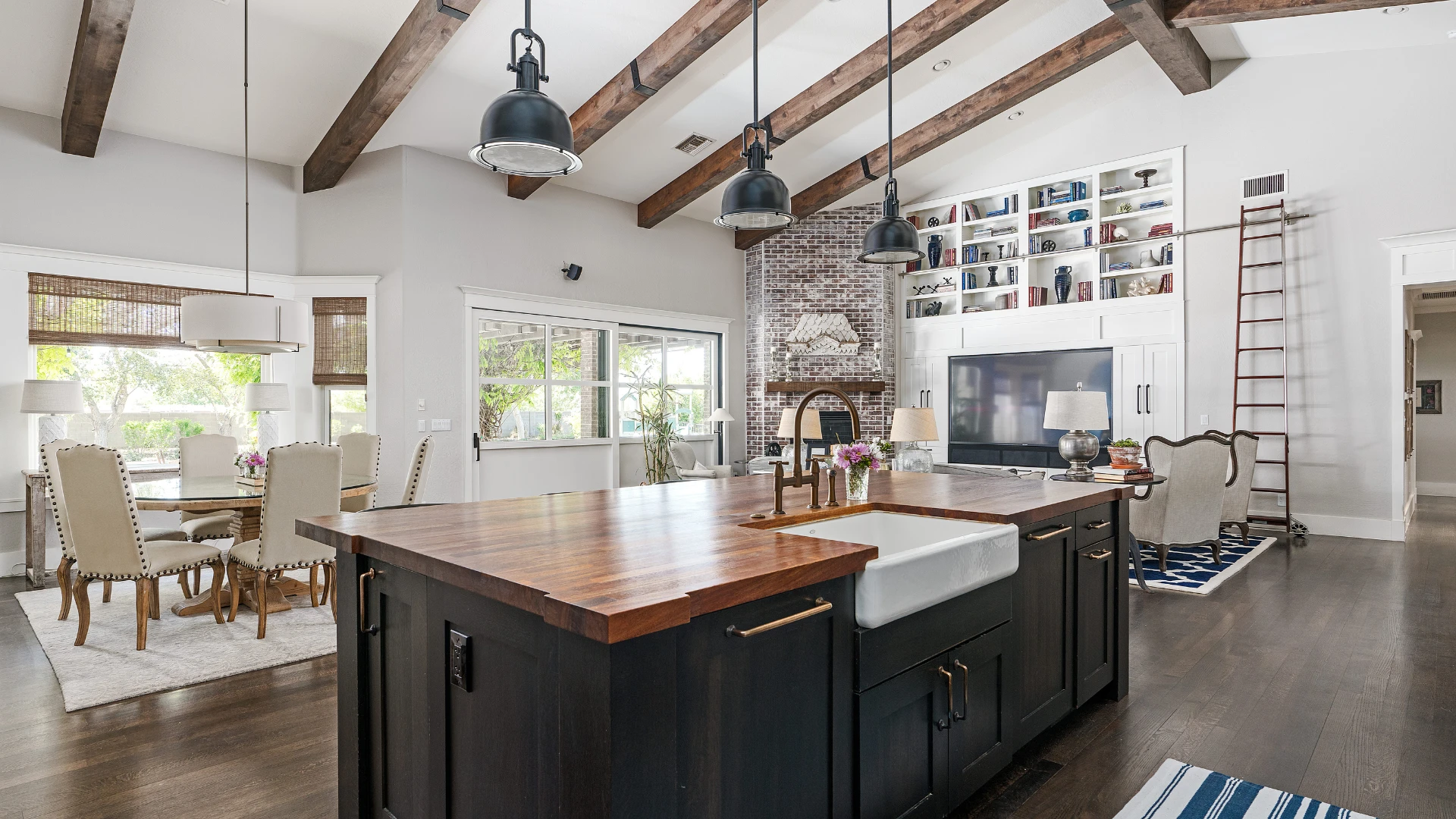
Smart kitchen design maximises space, boosts functionality, and adds value—especially in Irish homes where average kitchen sizes range from 10–15m². Popular 2025 trends include handleless cabinetry, quartz worktops, integrated storage, and multifunctional islands. Over 70% of Irish homeowners prioritise natural light and energy-efficient appliances. Efficient kitchen makeovers can increase resale value by up to 6%. Let’s explore popular design ideas:
Popular Kitchen Layout Ideas
1. Galley Kitchens for Narrow Irish Terraces
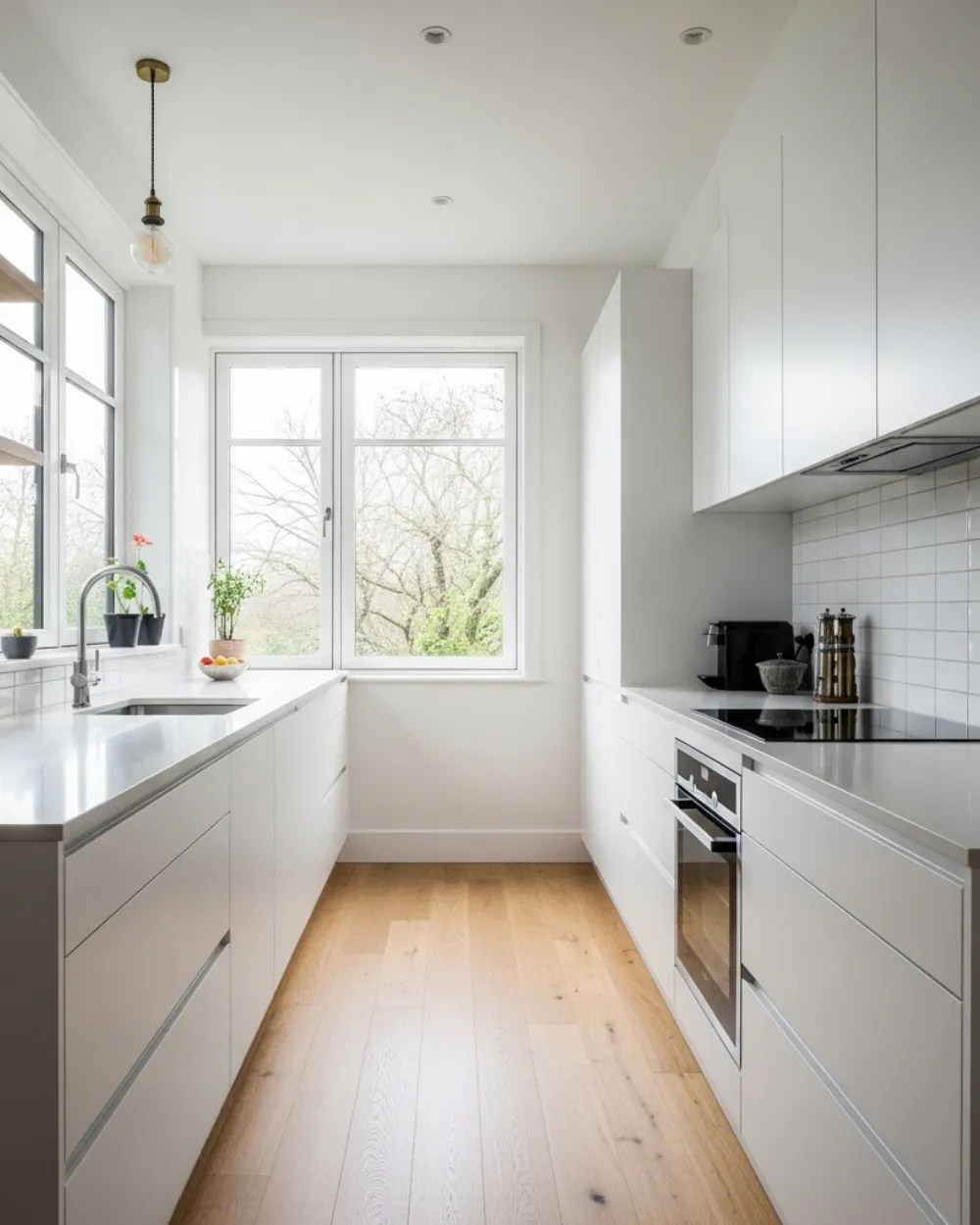

Galley kitchens maximise space in long, narrow layouts—perfect for period homes, city terraces, and apartments. With two parallel runs of cabinetry, you get a compact, efficient workflow. Everything from hob to sink is within easy reach, reducing unnecessary steps.
Tip: To prevent a cramped feel, use handleless doors, reflective splashbacks, and light-toned units. Adding under-cabinet lighting can make the corridor-like space feel taller and more open.
2. U-Shaped Kitchens with a Peninsula

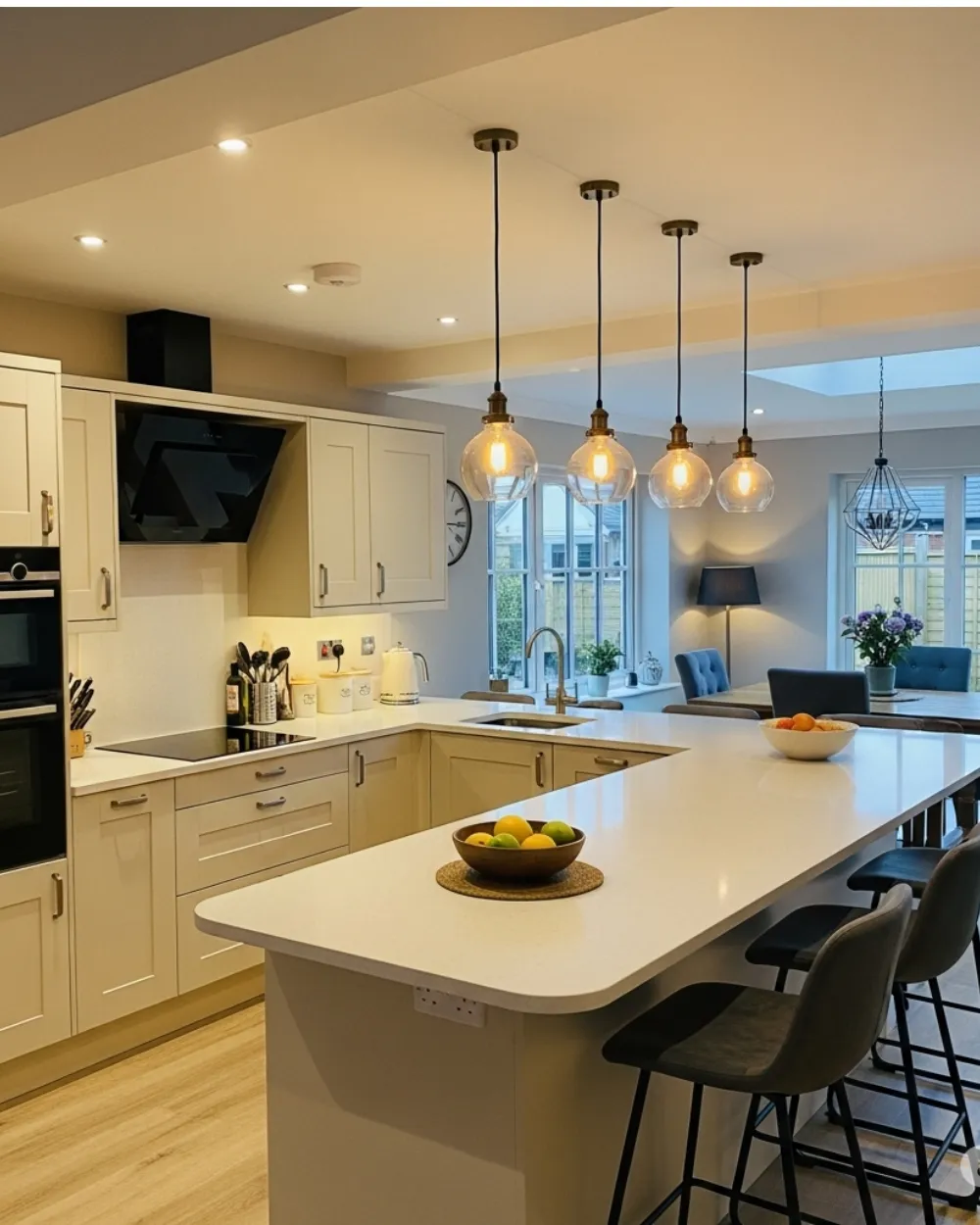
U-shaped kitchens create a highly efficient work triangle with generous countertop space and defined zones for prep, cooking, and cleanup. They’re well suited to semi-detached homes or modest kitchen extensions.
Tip: Instead of a freestanding island, add a peninsula for seating and extra prep space without interrupting traffic flow. It’s perfect for sociable cooking or keeping kids nearby while you work.
3. Broken-Plan Layouts

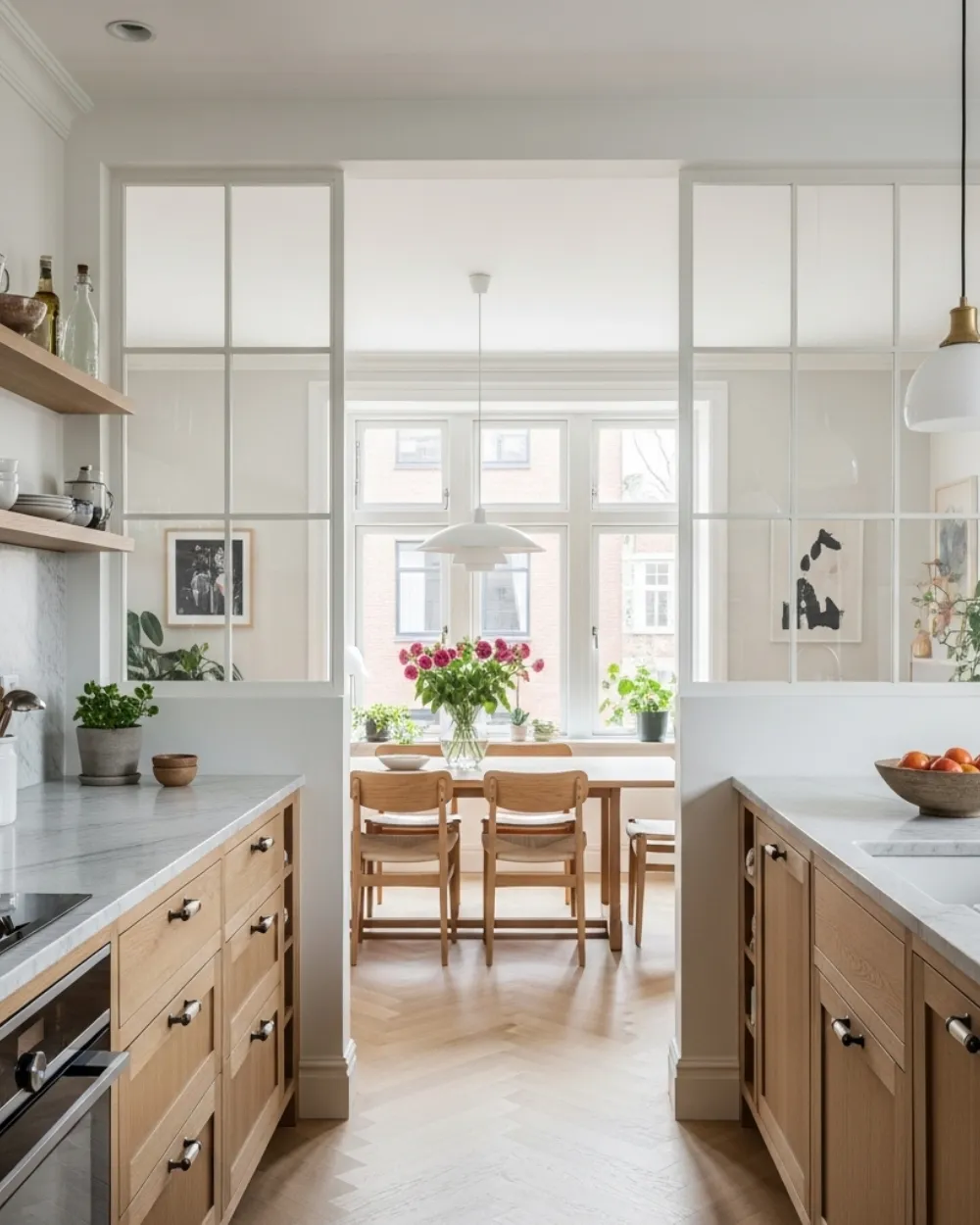
Broken-plan design blends the openness of an open-plan kitchen with subtle zoning to maintain structure and privacy. It uses half walls, open shelving, or glazed partitions to define spaces without closing them off.
Tip: Use different flooring or ceiling treatments to separate kitchen and dining zones. Glazed sliding doors or shelving units can allow light to flow while still creating functional boundaries.
4. Kitchen Islands with Built-In Storage and Seating
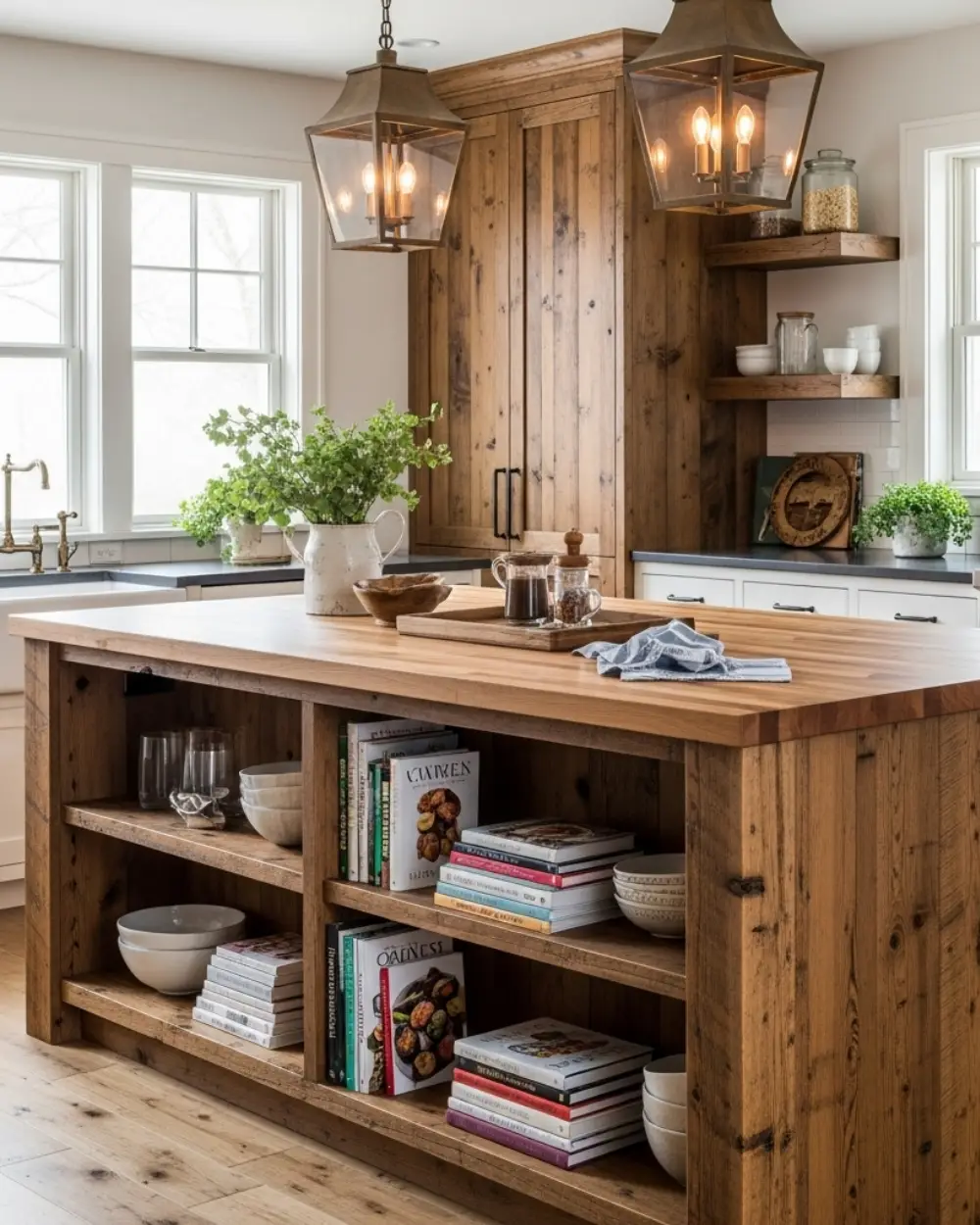
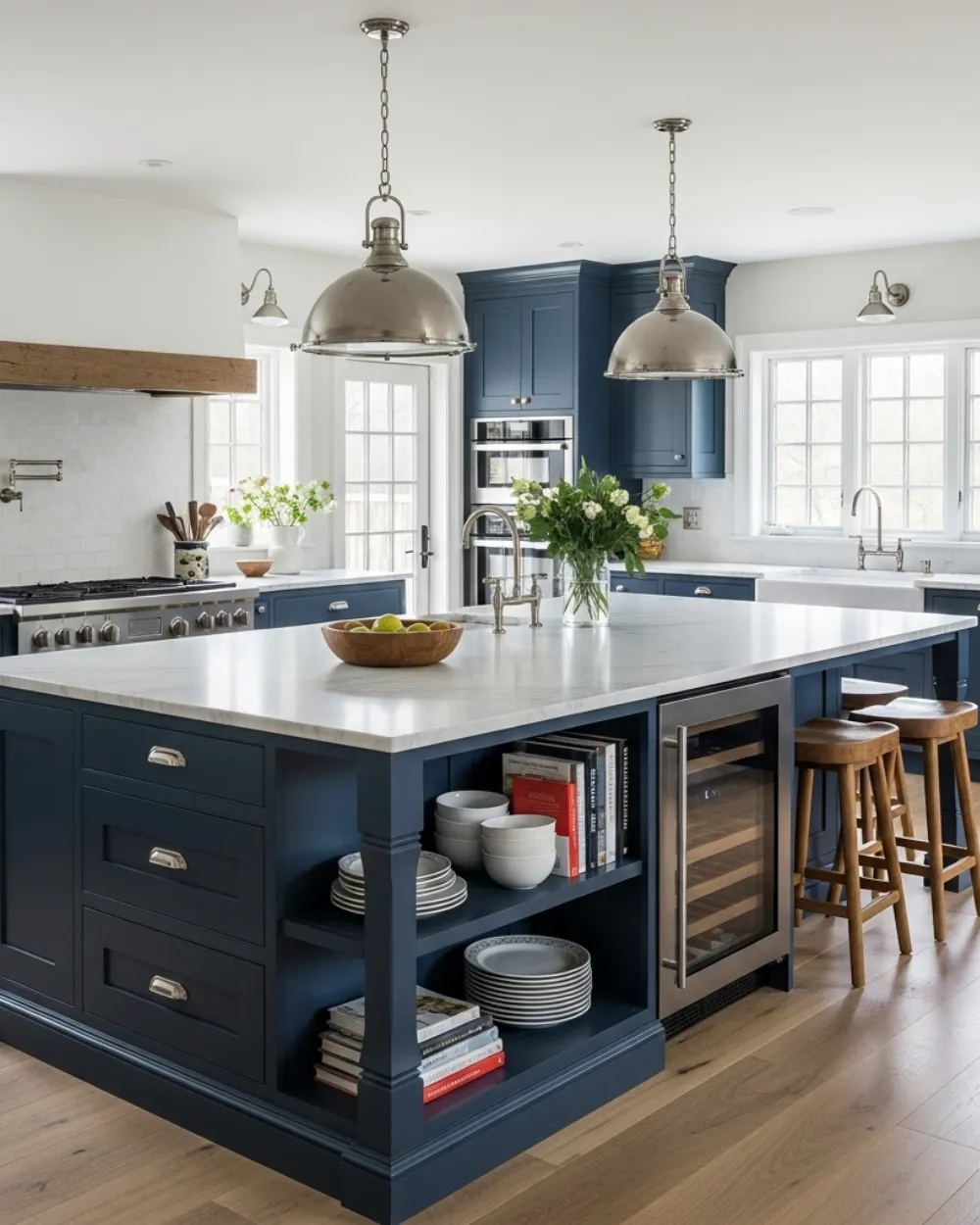
A well-designed island can become the workhorse of your kitchen—offering additional prep space, drawers, casual seating, and even power outlets. Some designs include integrated sinks, hobs, or wine fridges.
Tip: Ensure at least 90cm clearance around all sides for safe movement. Add built-in open shelving at the end for cookbooks or baskets, and consider pop-up sockets for charging and small appliances.
Contemporary Kitchen Design Concepts
5. Two-Tone Cabinetry

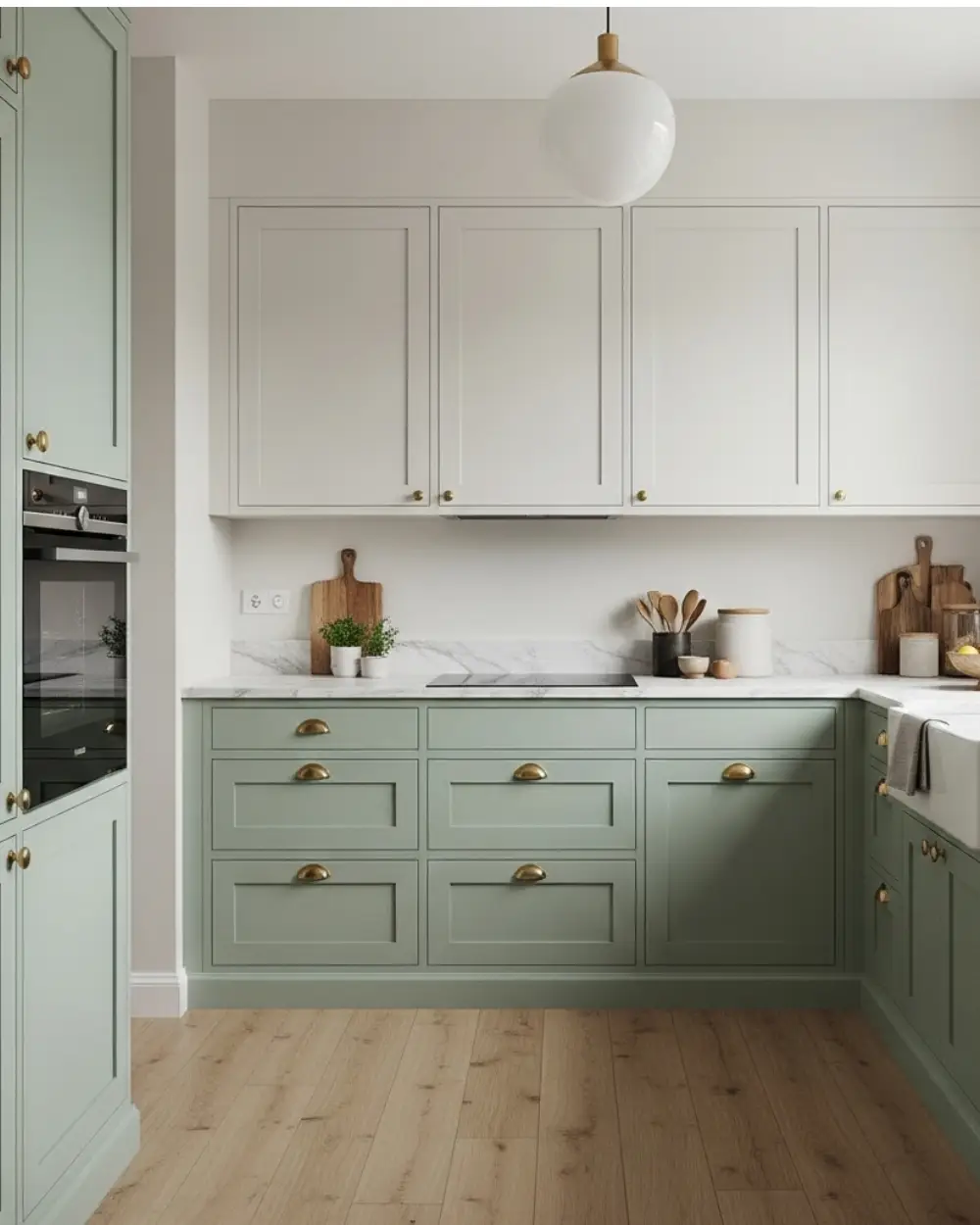
Two-tone cabinets bring depth and balance to modern kitchens. Using darker colours on the base (navy, charcoal, forest green) grounds the room, while lighter uppers (white, cream, pale grey) lift the space.
Tip: Stick to a neutral base if you’re nervous about colour. Pair with matching handles and worktops to avoid a disconnected look, and repeat tones in your splashback or flooring for cohesion.
6. Fluted Wood or Slatted Panel Fronts
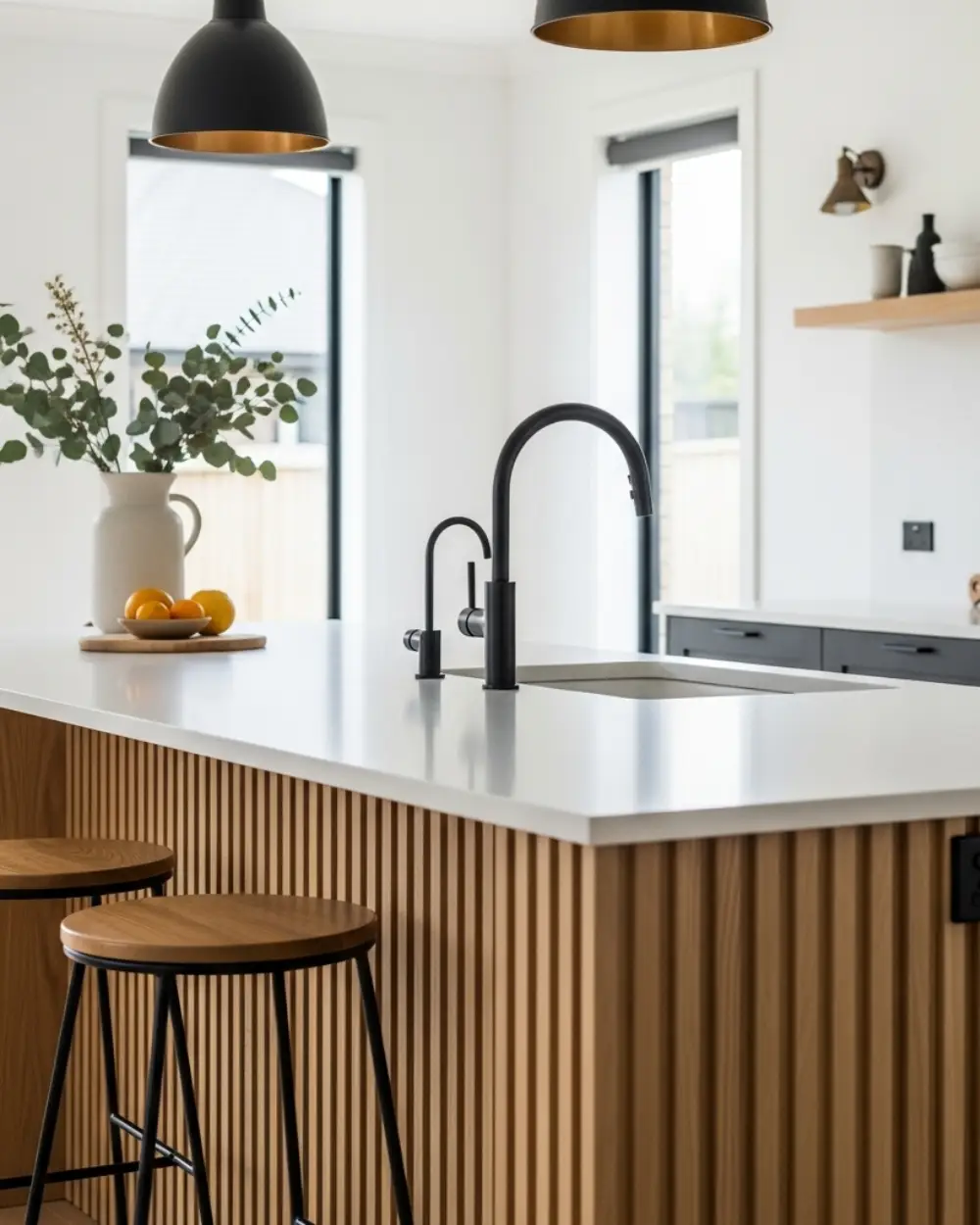
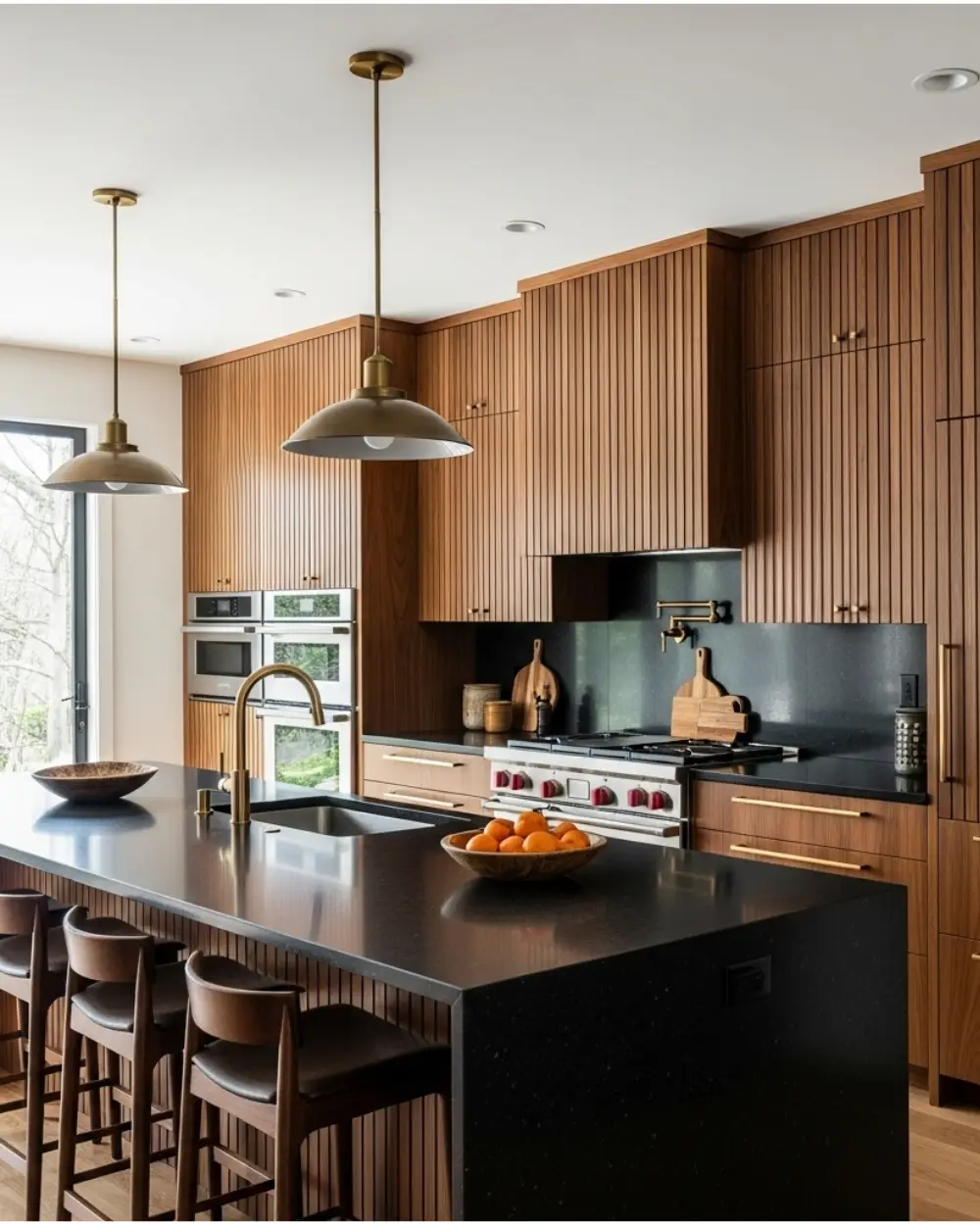
Fluted cabinet fronts and vertical slats introduce subtle texture while staying contemporary. They add interest without overwhelming, especially in Scandinavian- or Japandi-style homes. You’ll often see them on island bases or tall larders.
Tip: Choose wood tones like oak or walnut for warmth, or go painted for a sleek finish. Pair with integrated handles or push-to-open systems to keep the tactile effect clean and modern.
7. Minimalist Japandi Aesthetic
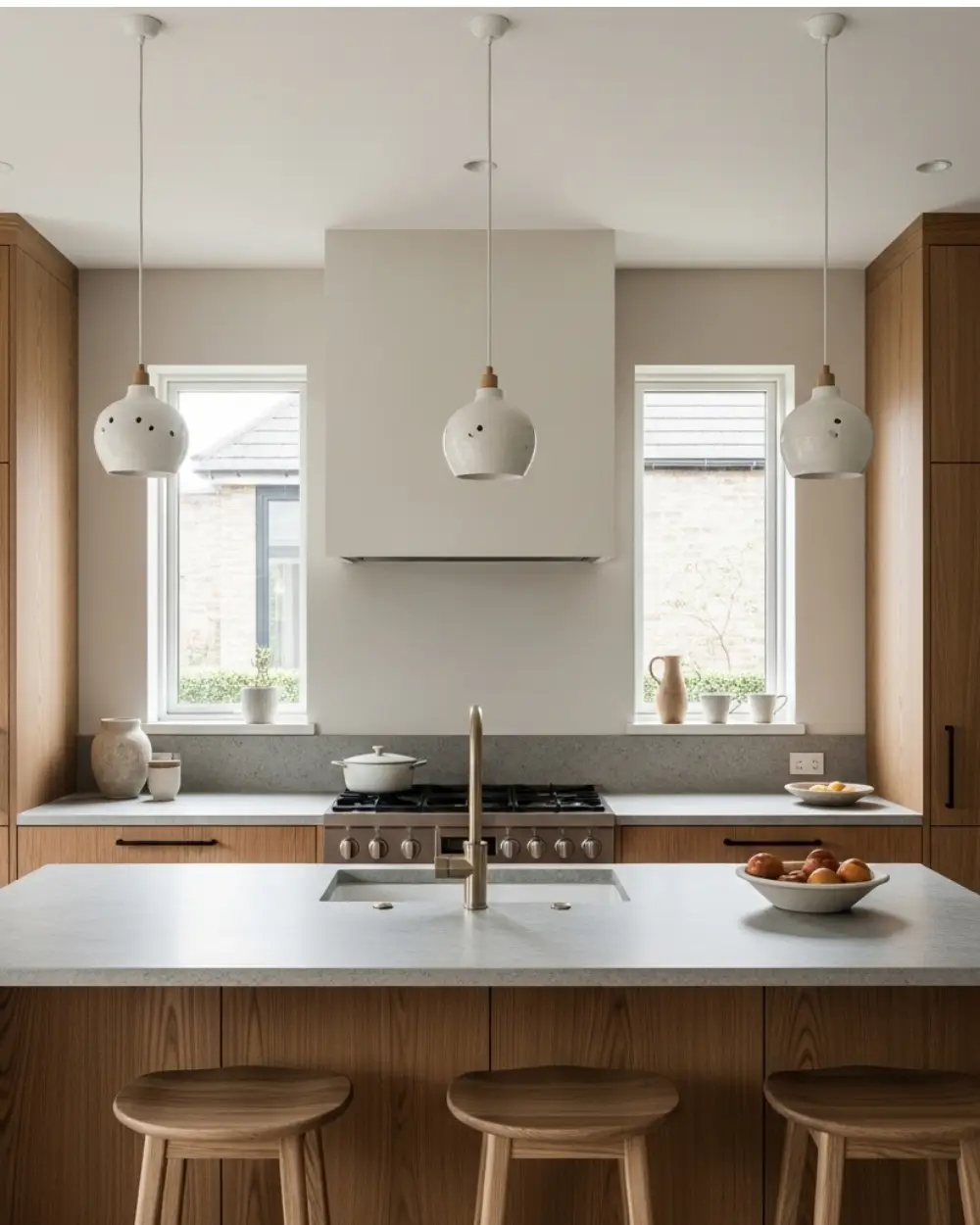
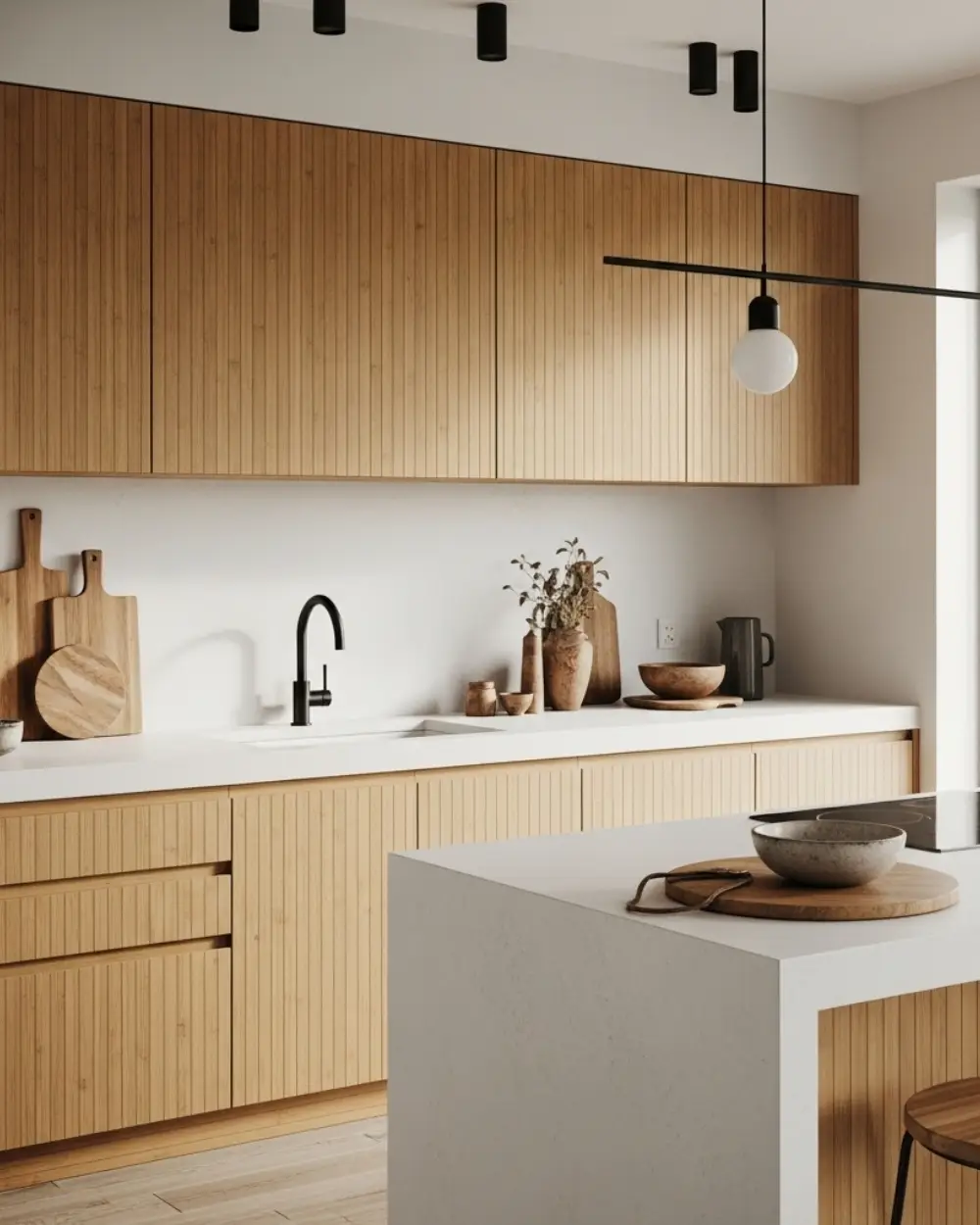
Japandi style combines Scandinavian simplicity with Japanese serenity. Expect light oak cabinets, open shelving, warm neutral tones, and clean, unadorned lines. It’s about balance, harmony, and function-driven beauty.
Tip: Keep the layout simple and surfaces clear. Use soft textiles, ceramic pendants, and organic forms to soften the minimalism and bring warmth into the space.
Trending Colour Schemes & Surface Finishes
8. Matt Black Accents

Matt black is a bold yet refined accent in modern kitchens. It’s ideal for tapware, cabinet handles, light fittings, and even bar stools—offering contrast without shouting. It suits both sleek modern and rustic looks.
Tip: Use black sparingly for visual punch—pair it with light woods or whites. For longevity, choose fingerprint-resistant finishes to keep the look sharp and low-maintenance.
9. Warm Neutrals Over Cold Greys
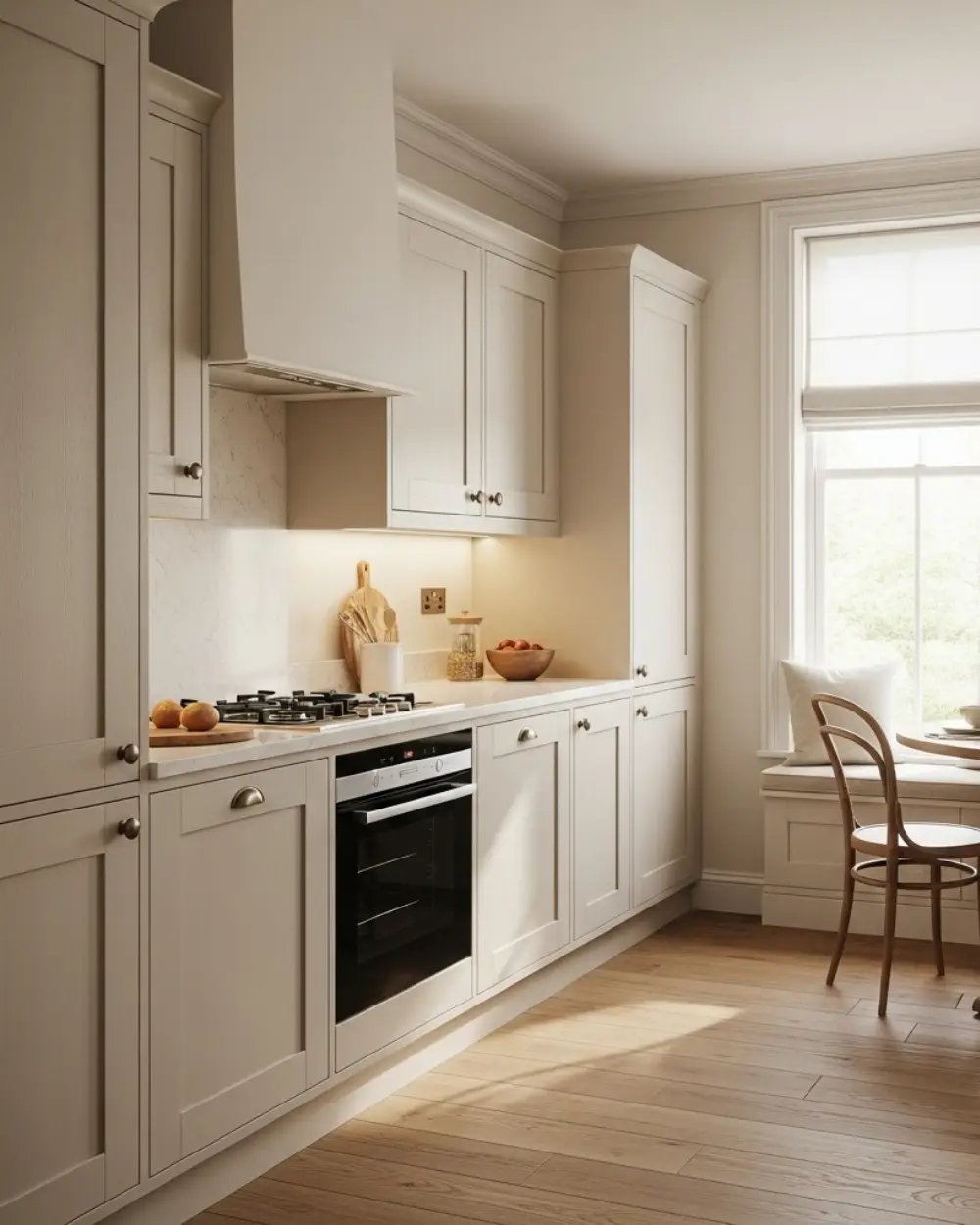
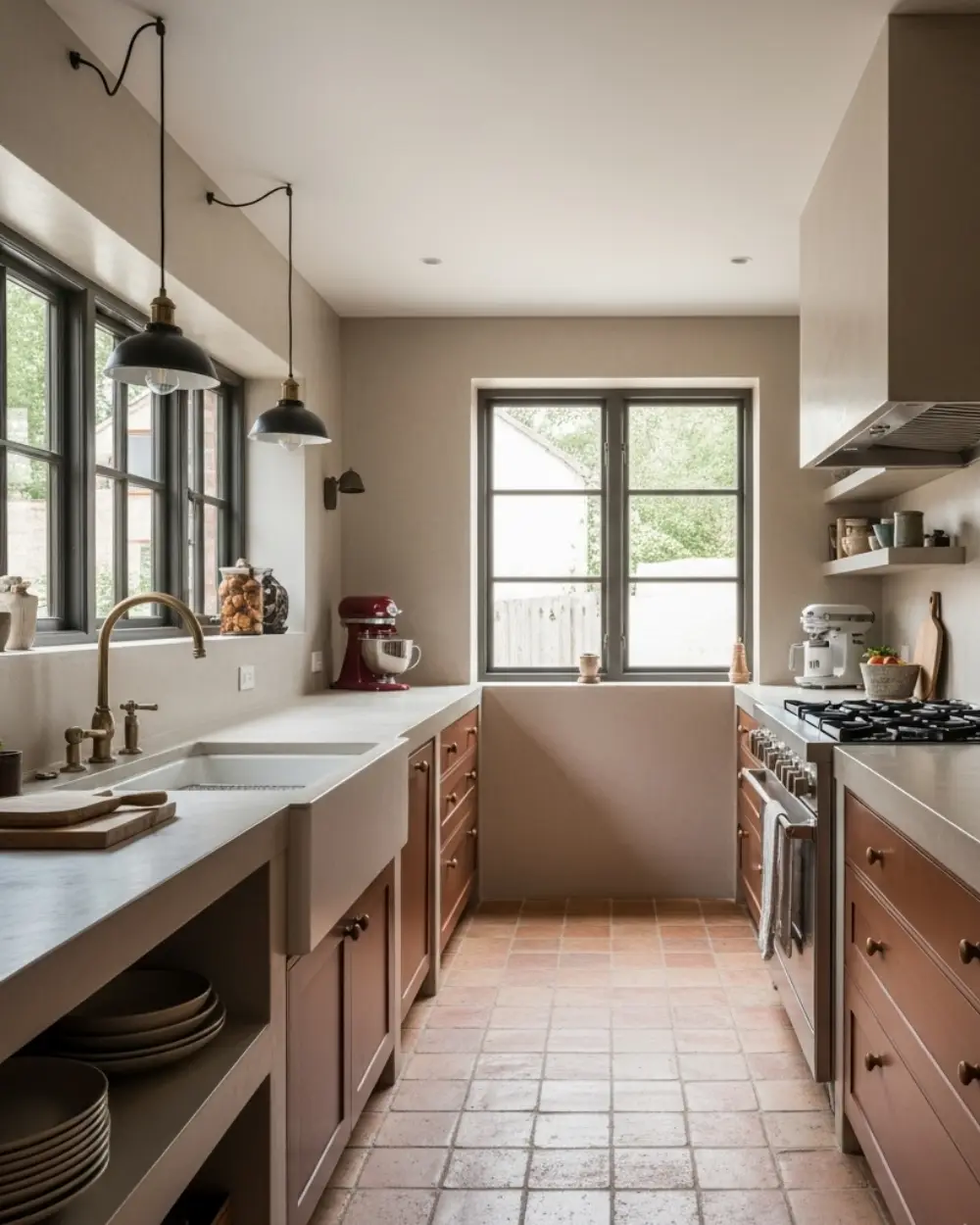
Grey is out, and warmer neutrals are in. Think mushroom, oat, greige, clay, and stone. These hues add depth and comfort, making kitchens feel cosier—especially in Ireland’s cool, grey-lighted homes.
Tip: Use warm neutrals as a base and layer in texture with timber, natural stone, or warm metals like brass. They also pair beautifully with heritage greens or soft blues for subtle contrast.
10. Terrazzo Worktops and Splashbacks
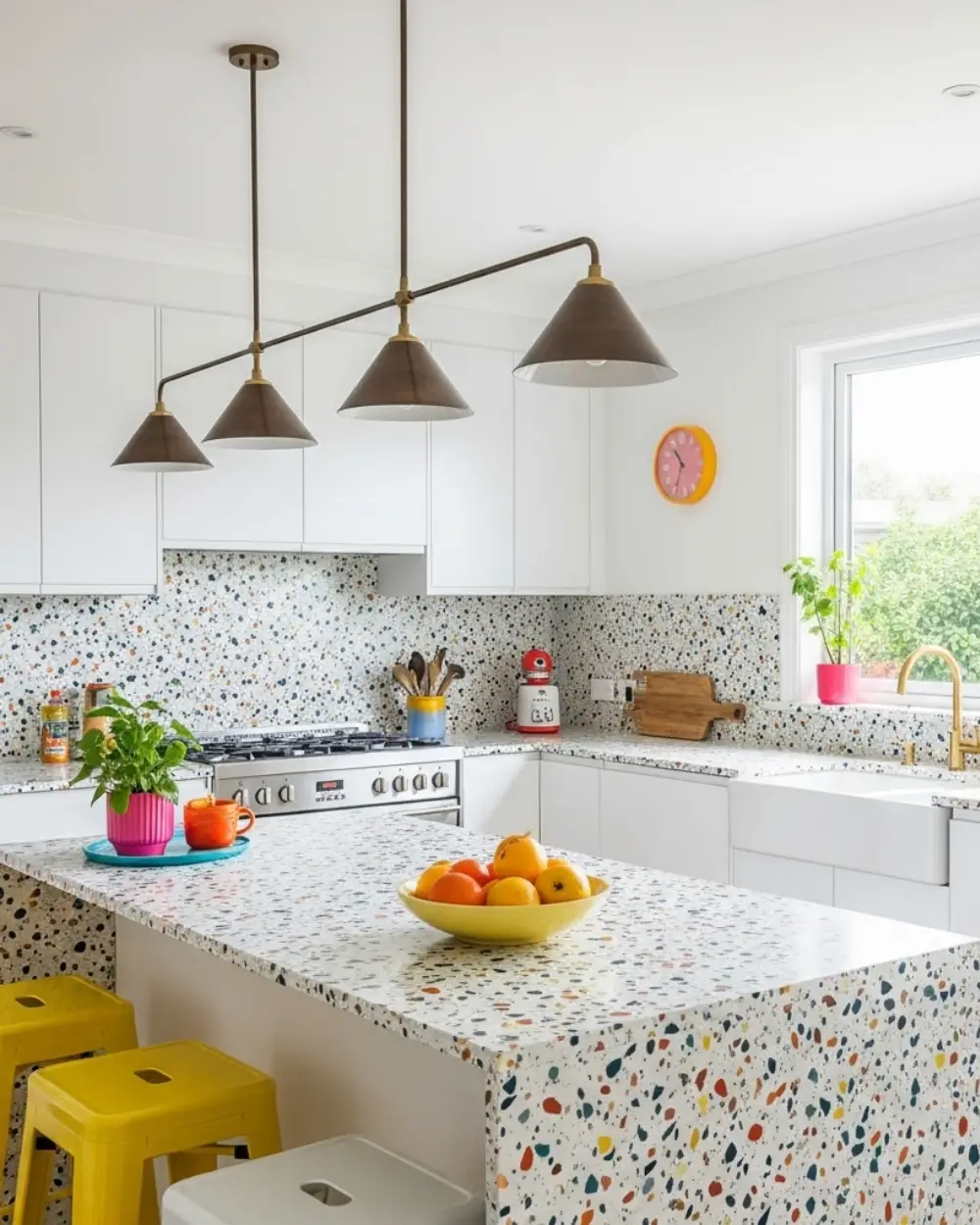

Terrazzo is a colourful, playful material made from chips of marble, quartz, or glass. It’s making a comeback in kitchens, offering an alternative to uniform stone surfaces. Every slab is unique.
Tip: Go bold with large colourful flecks, or keep it subtle with monochrome tones. Use terrazzo on both worktops and splashbacks for continuity, and balance it with plain cabinetry to avoid visual overload.
Standout Kitchen Features
11. Walk-In Pantries or Larder Walls
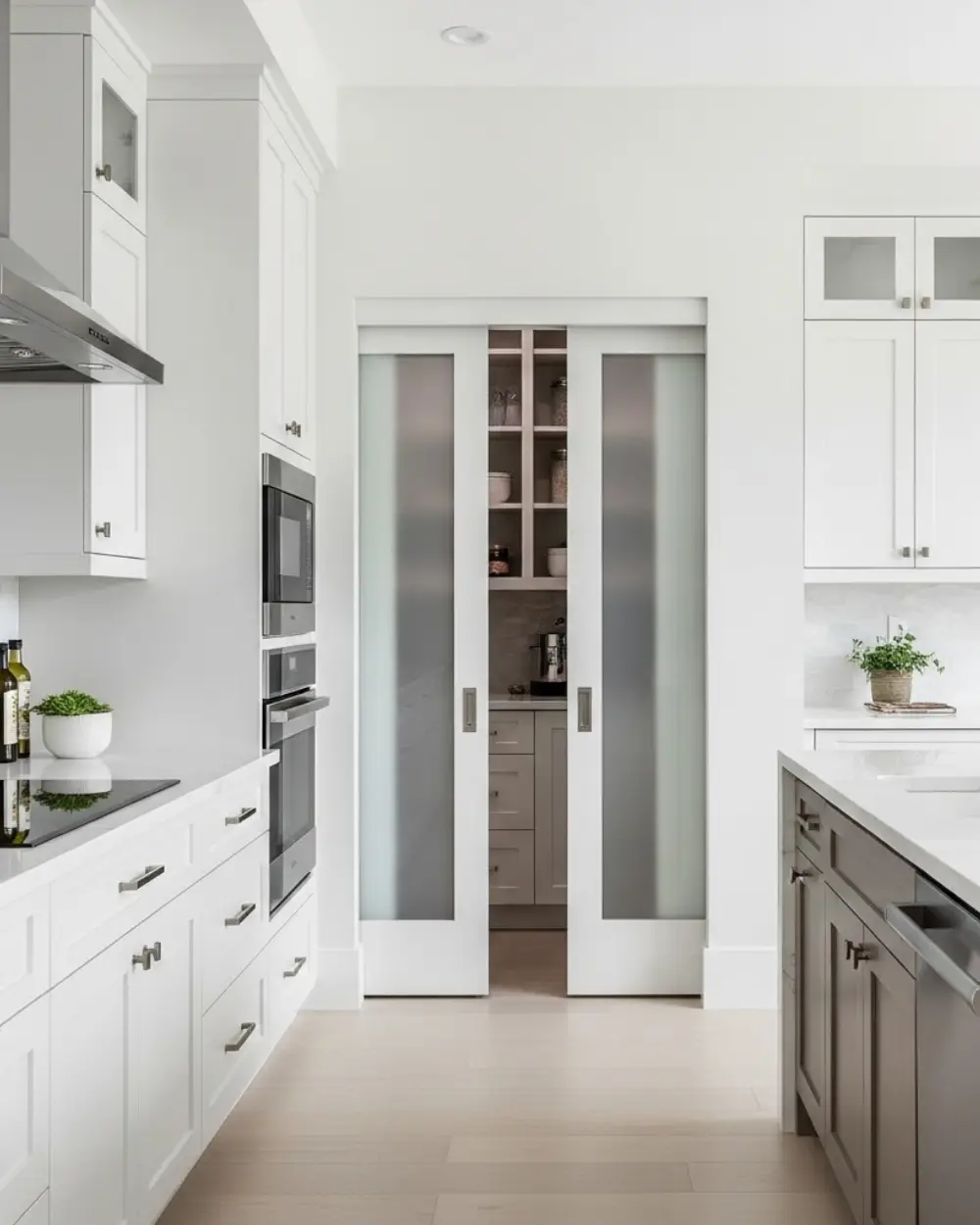
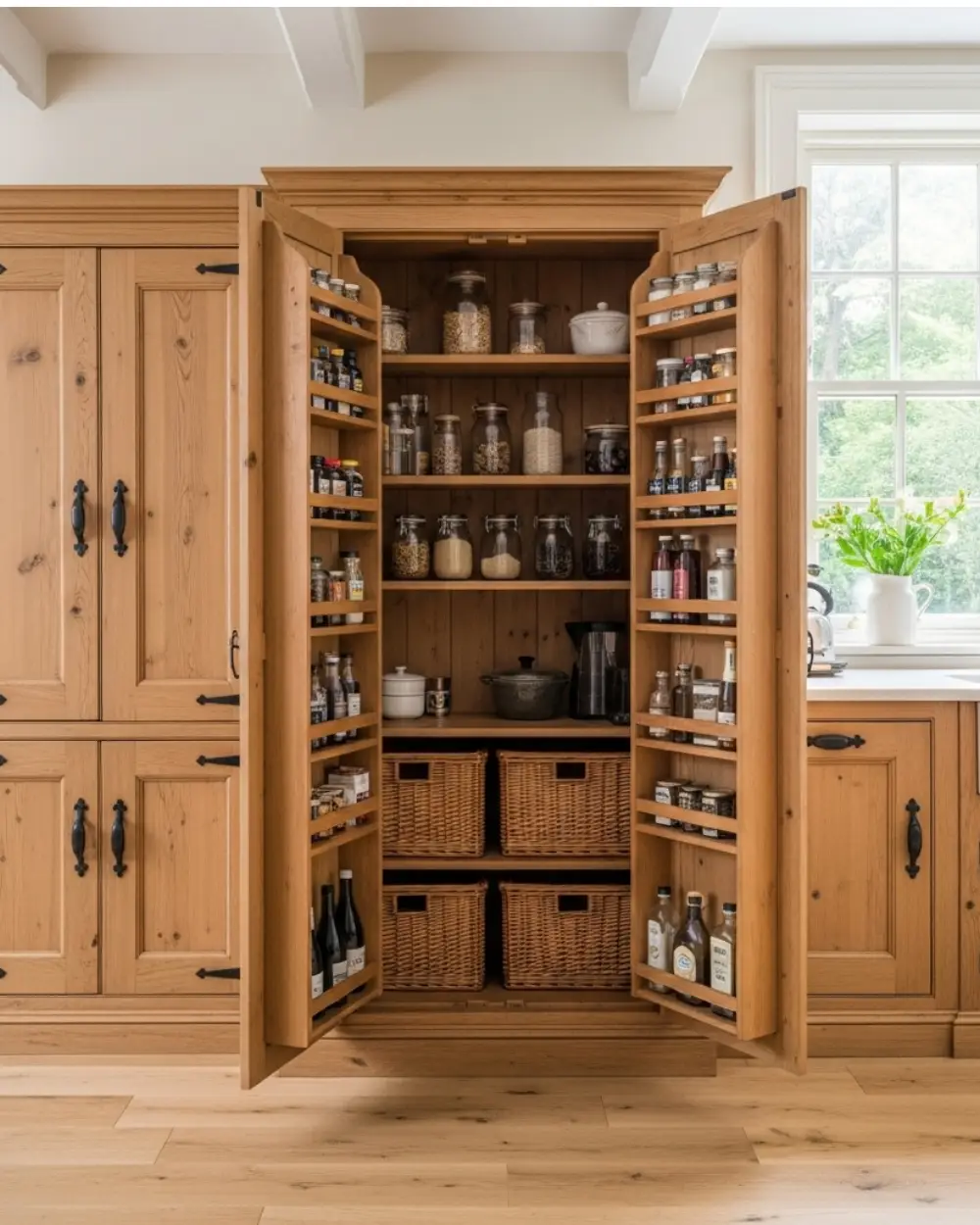
Walk-in pantries and tall larder walls are no longer limited to large homes—they’re now cleverly designed to fit compact spaces too. Hide dry goods, small appliances, and bulk storage behind pocket or sliding doors.
Tip: Use pull-out trays, adjustable shelving, and interior lighting to maximise visibility and usability. Larder walls can also house built-in coffee stations or breakfast zones.
12. Statement Pendant Lighting Over the Island

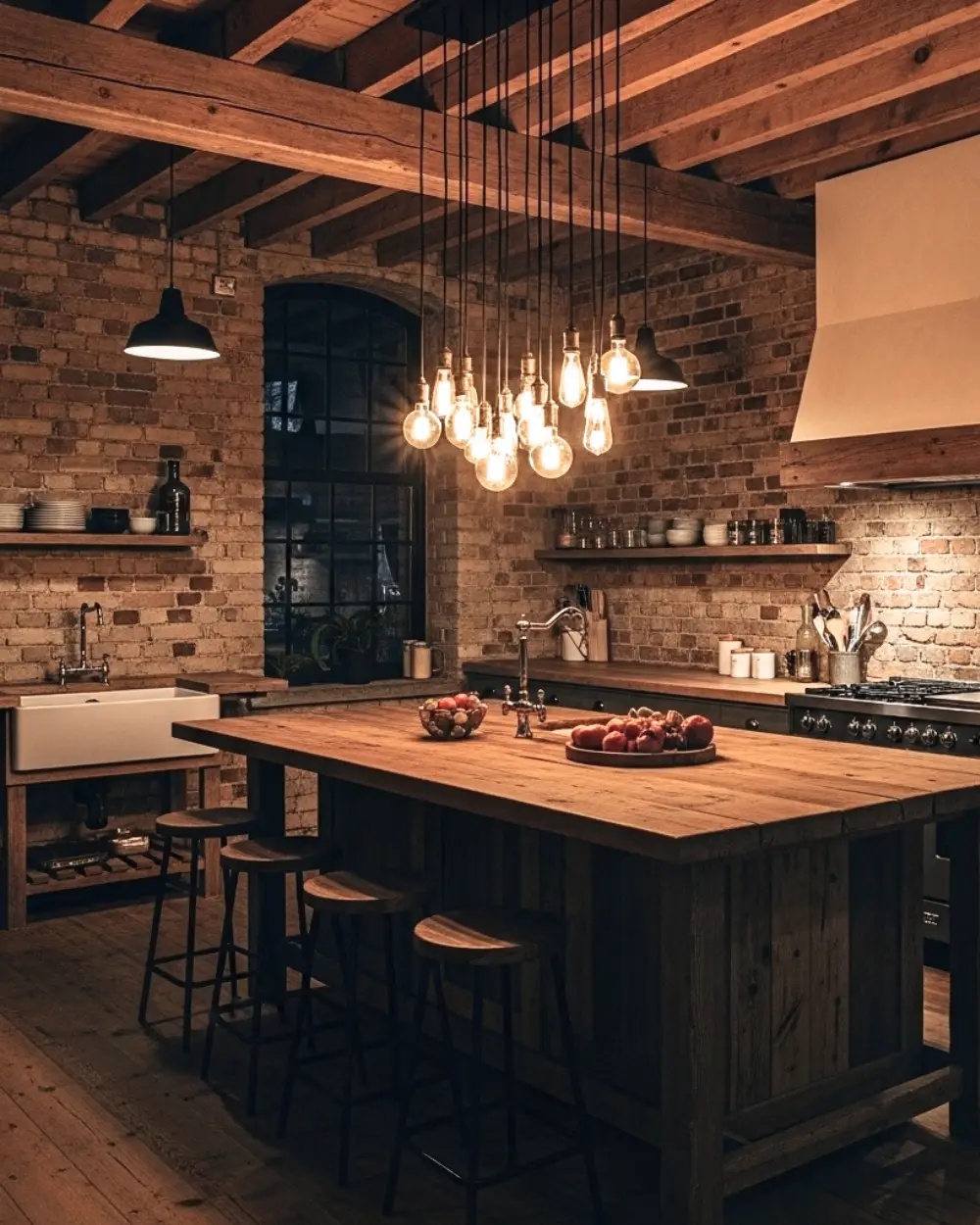
Oversized pendant lights are both functional and decorative. Whether metallic, ceramic, or woven, they anchor your island visually and add a designer finish. Clustering pendants in odd numbers is particularly effective.
Tip: Hang pendants about 75–90cm above the island for ideal lighting. Choose dimmable fittings for versatility—bright for cooking, soft for dining or entertaining.
13. Hidden Utility Zones

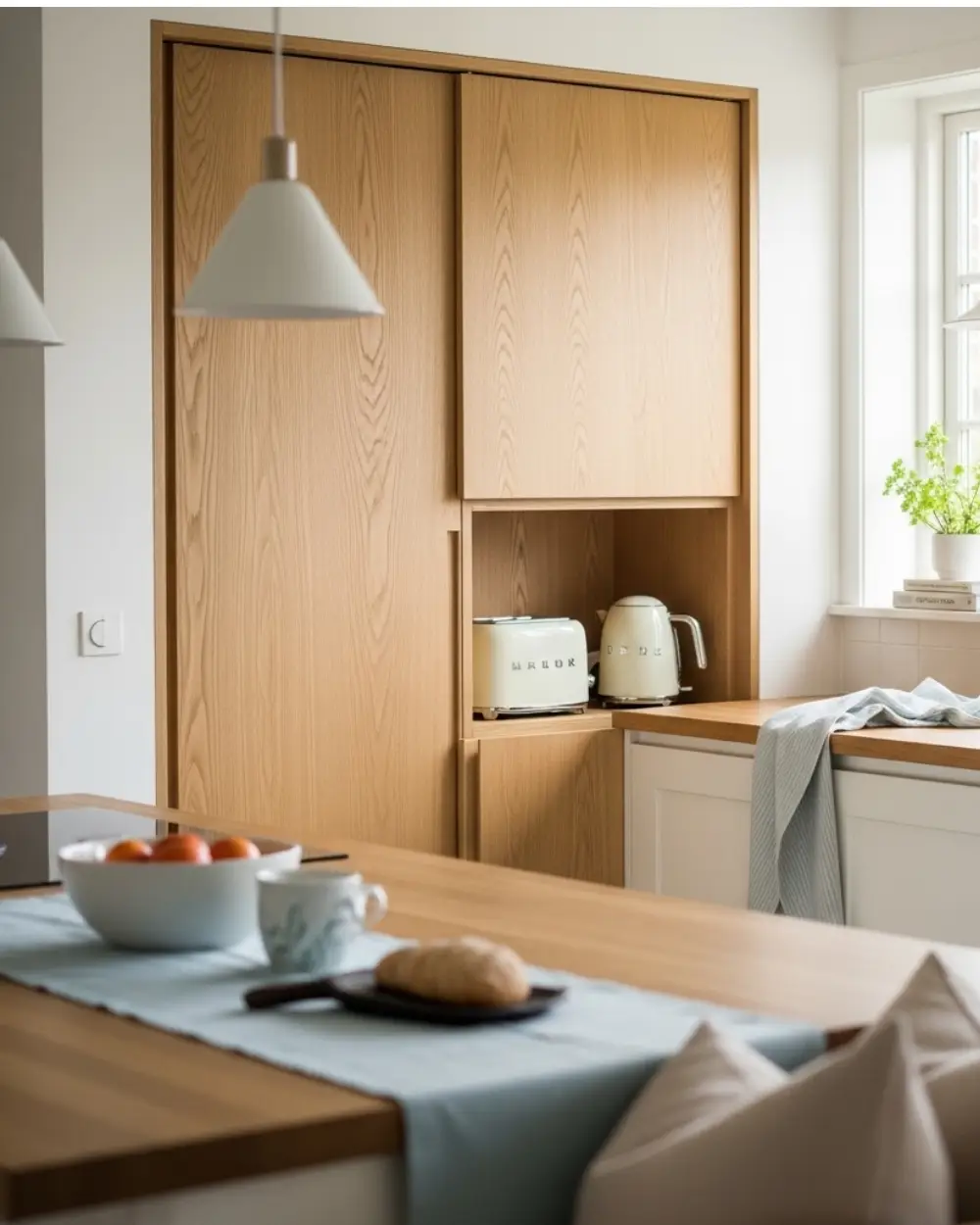
Tucking small appliances or laundry areas behind cabinet doors helps open-plan kitchens stay sleek. Appliance garages, bi-fold cupboards, or pull-out worktops keep functionality close but out of sight.
Tip: Use pocket or retractable doors for daily-use items like toasters and kettles. Add integrated sockets and lighting inside the utility space to make it as usable as the rest of the kitchen.
Functional Style Ideas for Small Kitchens
14. Ceiling-Height Cabinetry with Ladder Storage

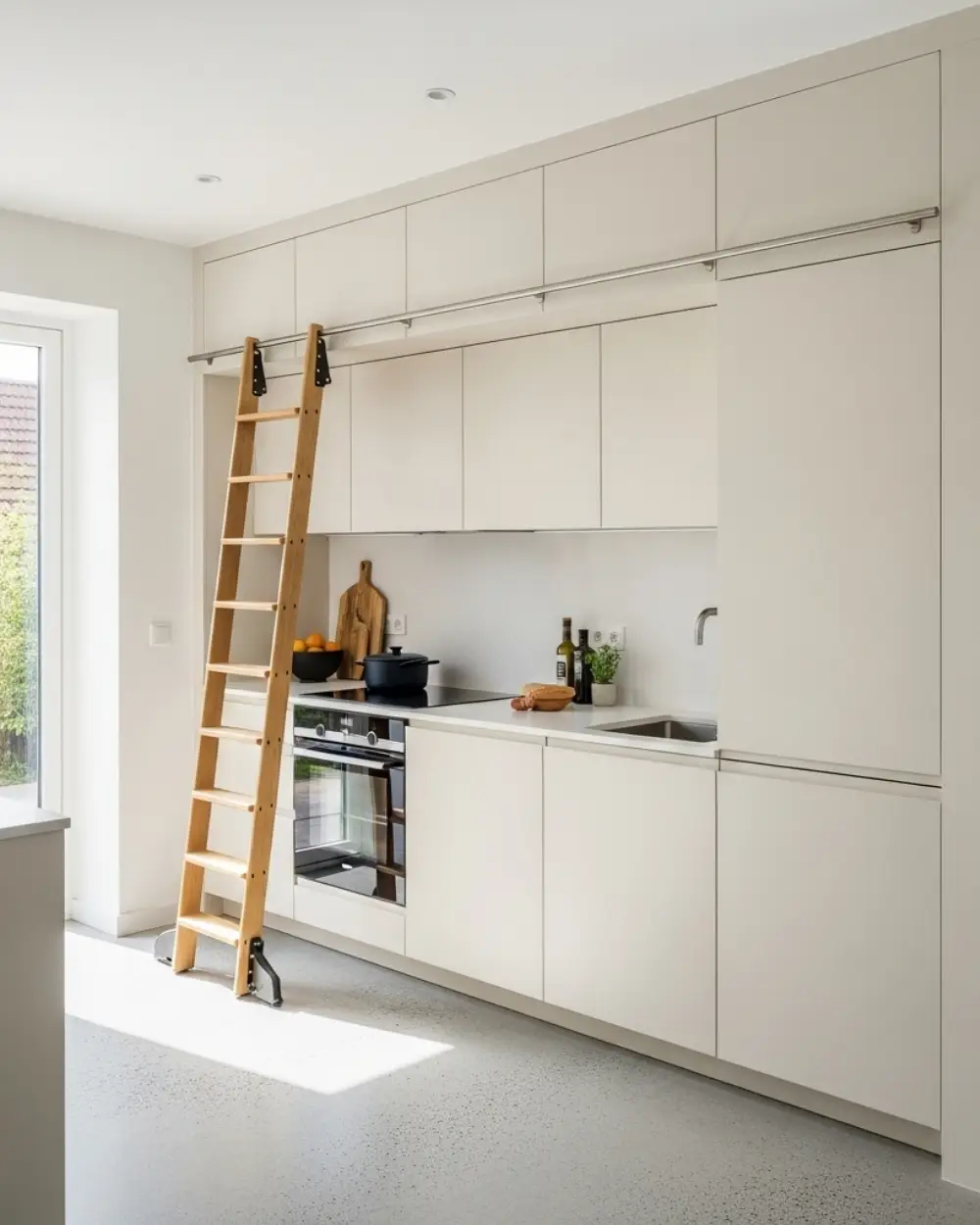
Tall cabinets maximise vertical storage in small kitchens, making space for bulk goods or infrequently used items. A rolling ladder adds charm and practicality, especially in period or high-ceilinged homes.
Tip: Install soft-close hinges and wide-opening doors for easier access at height. Use open shelving on the top row for items you don’t need daily, like seasonal bakeware or serving dishes.
15. Pull-Out Pantry Drawers Instead of Fixed Shelves
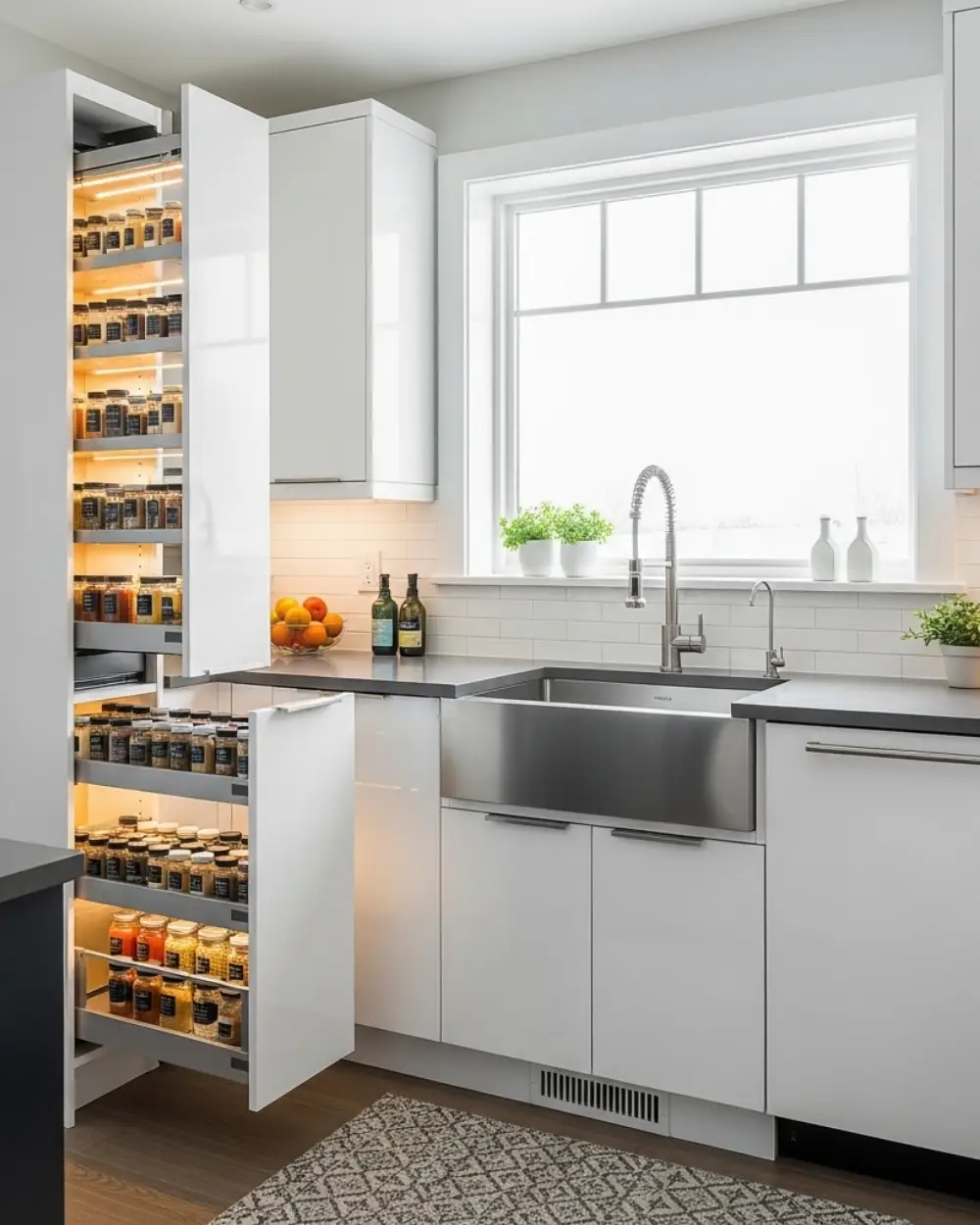
Tall pull-out drawers give better access to pantry items than deep shelves. Everything slides out fully, so nothing gets lost at the back. They’re perfect for narrow spaces beside fridges or ovens.
Tip: Use adjustable dividers inside the drawers to keep packets upright and visible. Label the top of each section or use clear containers for fast access and inventory control.
16. Reflective Surfaces to Bounce Natural Light
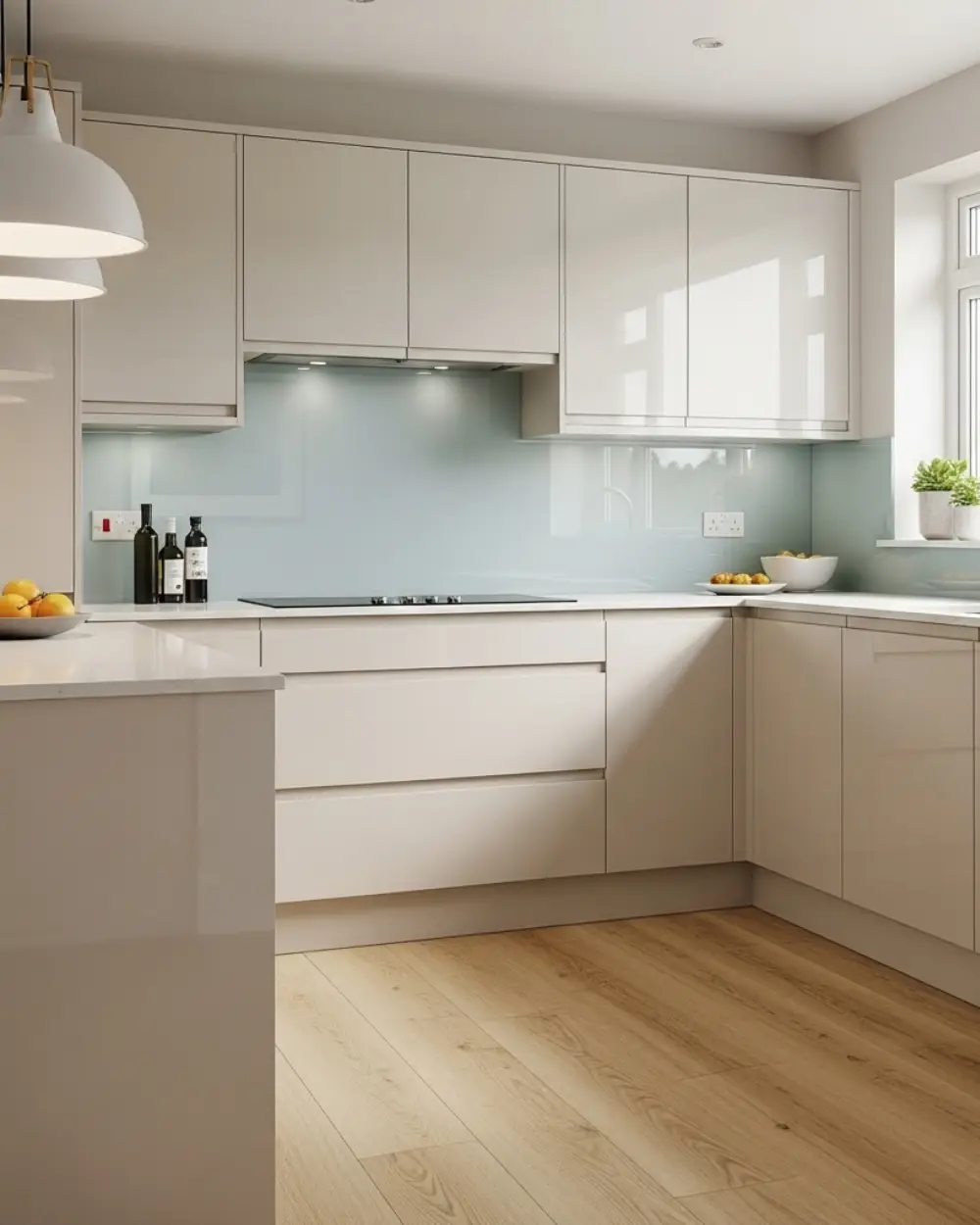
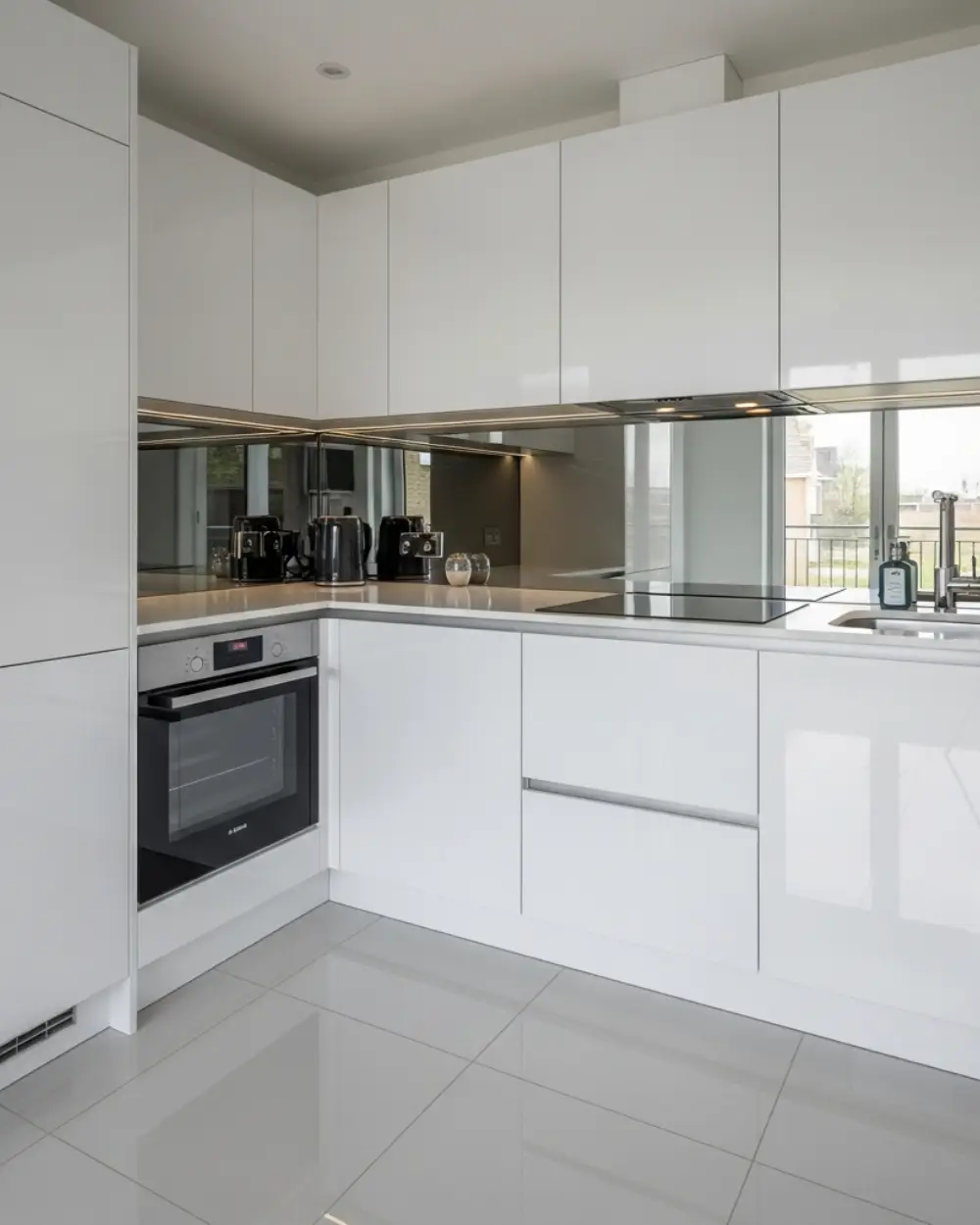
Glossy finishes and mirrors can dramatically increase brightness in compact kitchens. They reflect both artificial and natural light, helping the space feel open and expansive.
Tip: Choose high-gloss cabinetry, mirrored splashbacks, or glazed tiles to reflect light. Keep colour palettes light and uniform to enhance the effect—especially useful in north-facing or window-limited kitchens.
Niche Kitchen Style Ideas
17. Industrial-Inspired Kitchens
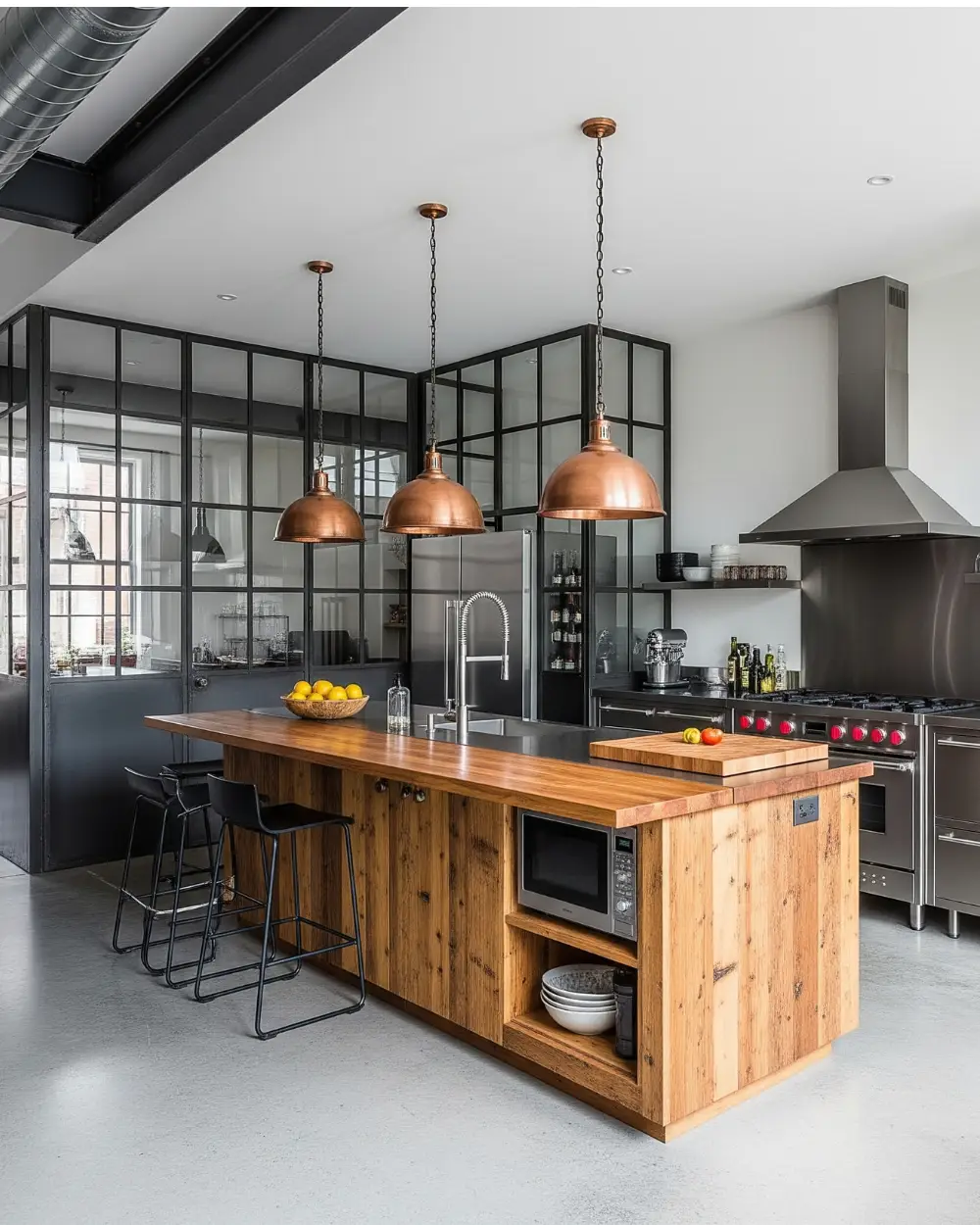

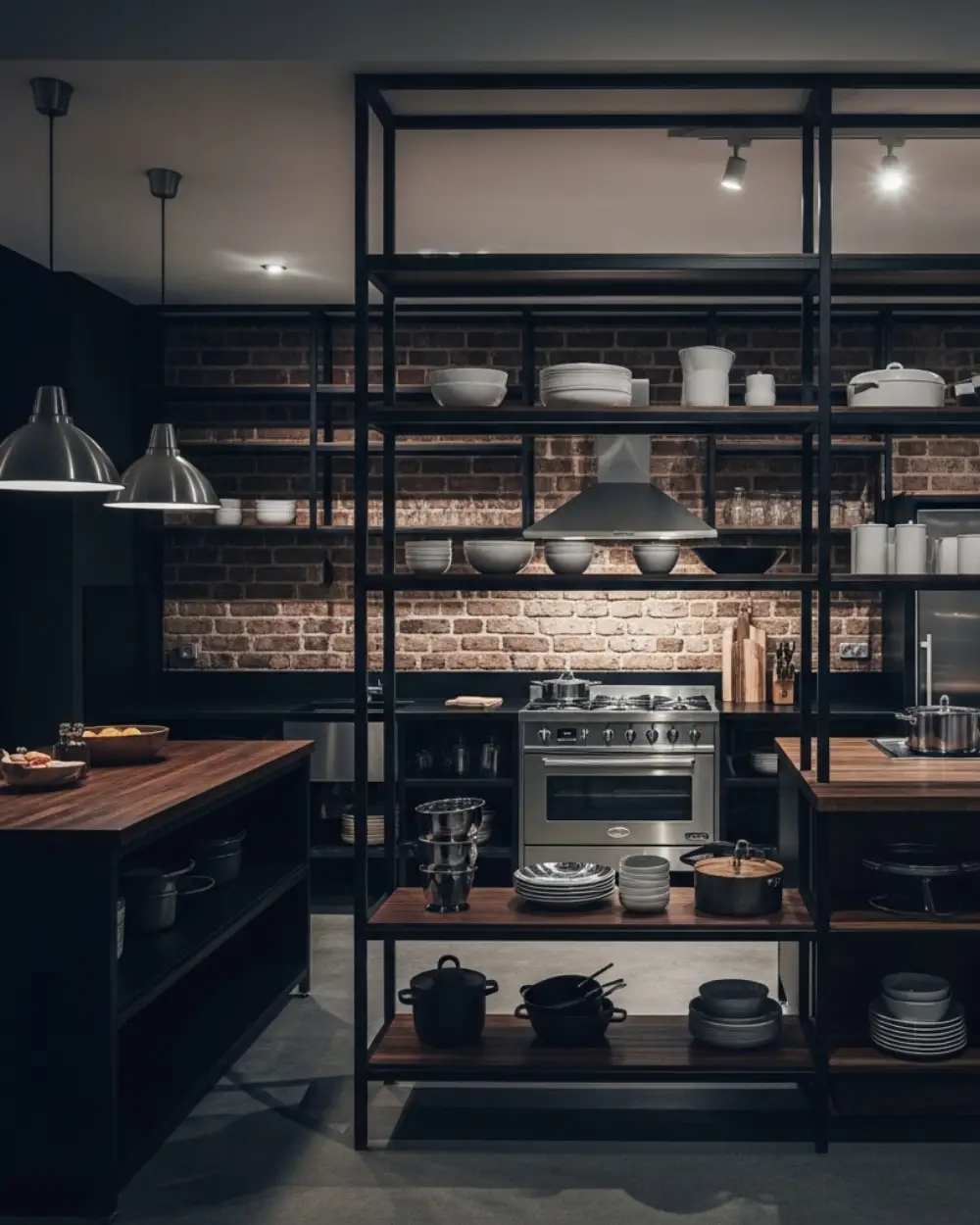
Industrial kitchens highlight raw materials like brick, steel, and concrete. Expect open shelving, dark colour schemes, and functional layouts. This style suits extensions and open-plan conversions with high ceilings or large windows.
Tip: Soften the industrial edge with wood accents or warm lighting, plush bar stools or a rug under the island—this adds comfort without losing the gritty, urban aesthetic.
18. Modern Farmhouse Kitchens
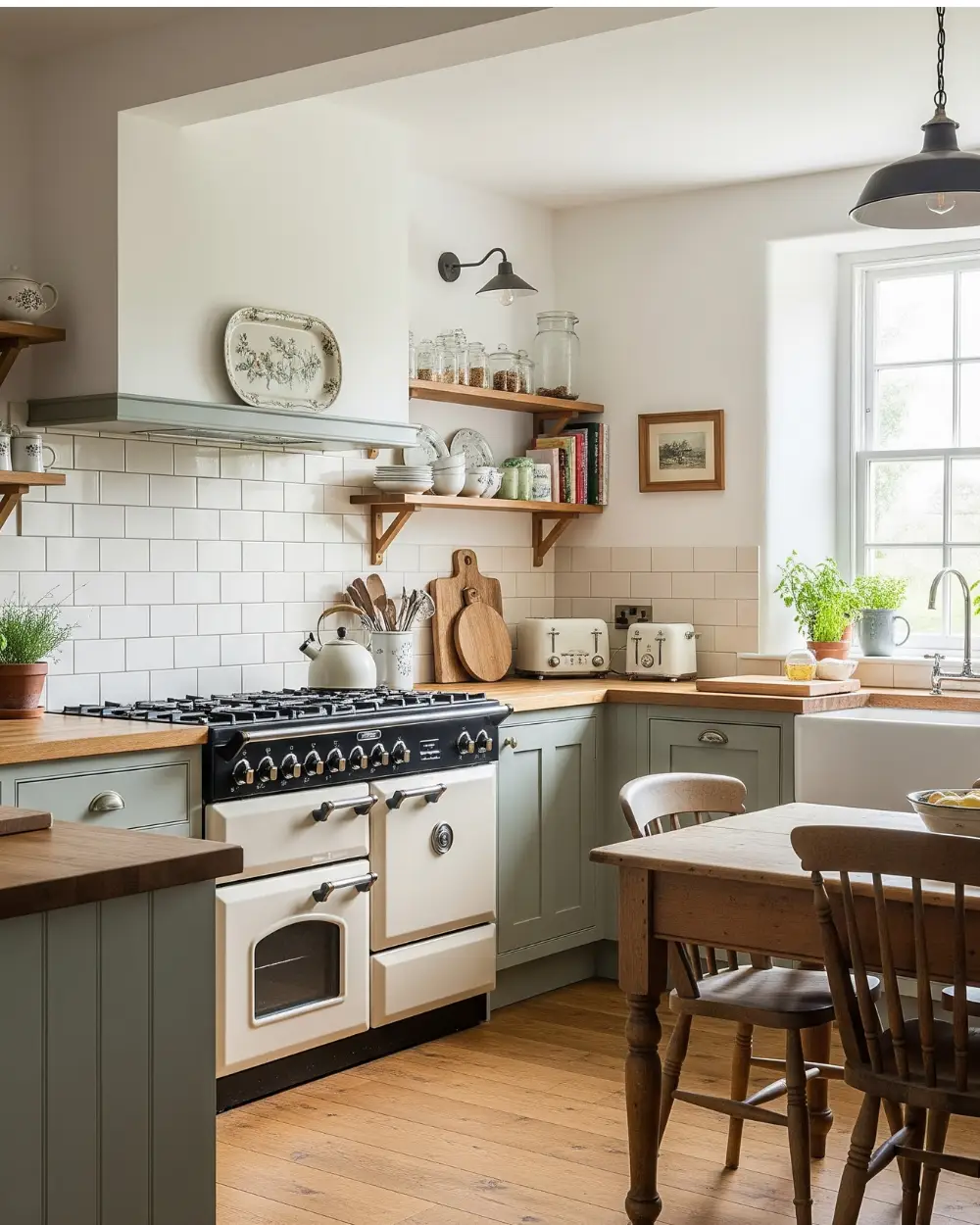
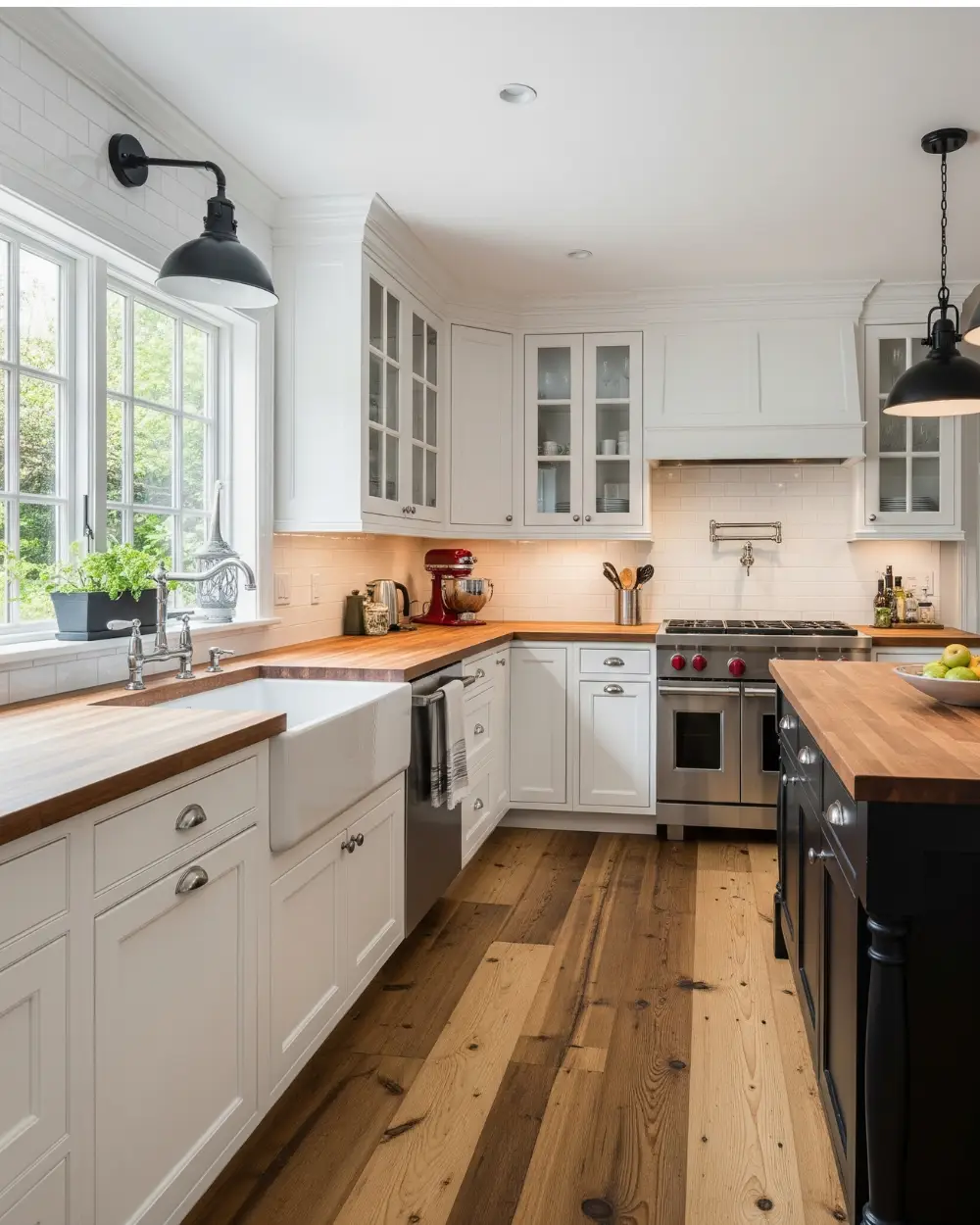
Modern farmhouse kitchens blend shaker cabinets, apron sinks, and wood textures with contemporary surfaces like quartz or matte metals. Colours are usually soft: white, sage, or pale greys.
Tip: To avoid cliché, mix rustic details with sleek modern elements—like integrated appliances or minimal handles—for a fresh, authentic look.
19. Coastal or Mediterranean Style Kitchens


These kitchens are light, relaxed, and textured. Coastal looks use whites, sea blues, and rattan; Mediterranean leans into terracotta, ceramic tiles, and arched features. Both styles feel airy and sunlit.
Tip: Use natural fabrics, textured surfaces, and plenty of white to reflect light—ideal for brightening typically grey Irish interiors.
Unique Storage & Organisation Concepts
20. Corner Carousel Cabinets & Magic Corners

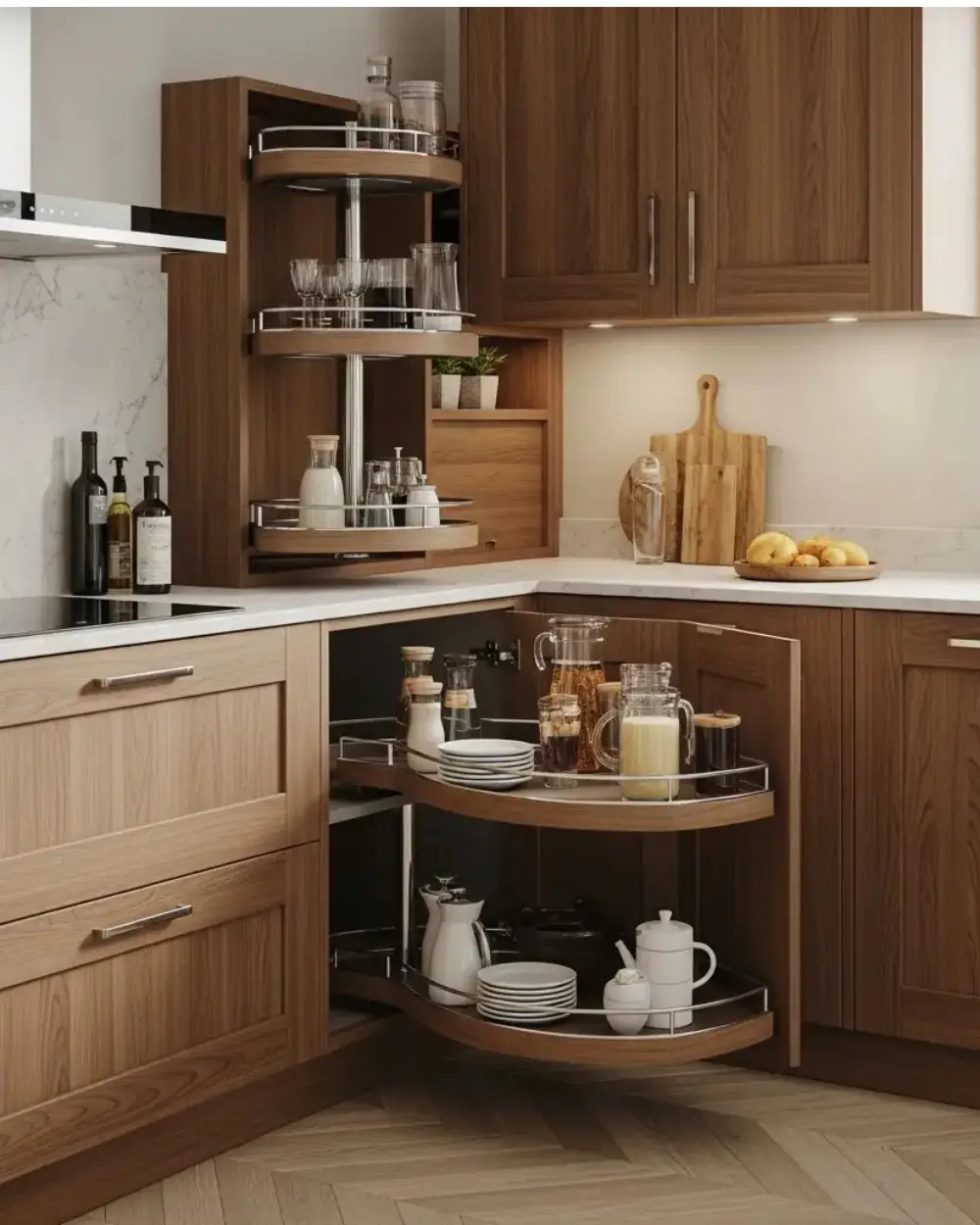
Corner carousels and magic corners solve the awkward dead-space problem in L- or U-shaped kitchens. They bring hidden shelves forward so pots, pans, or pantry items are easily accessible.
Tip: Choose soft-close mechanisms and full-extension fittings to get the most value—and keep your back from doing all the work.
21. Overhead Pot Racks or Rail Systems
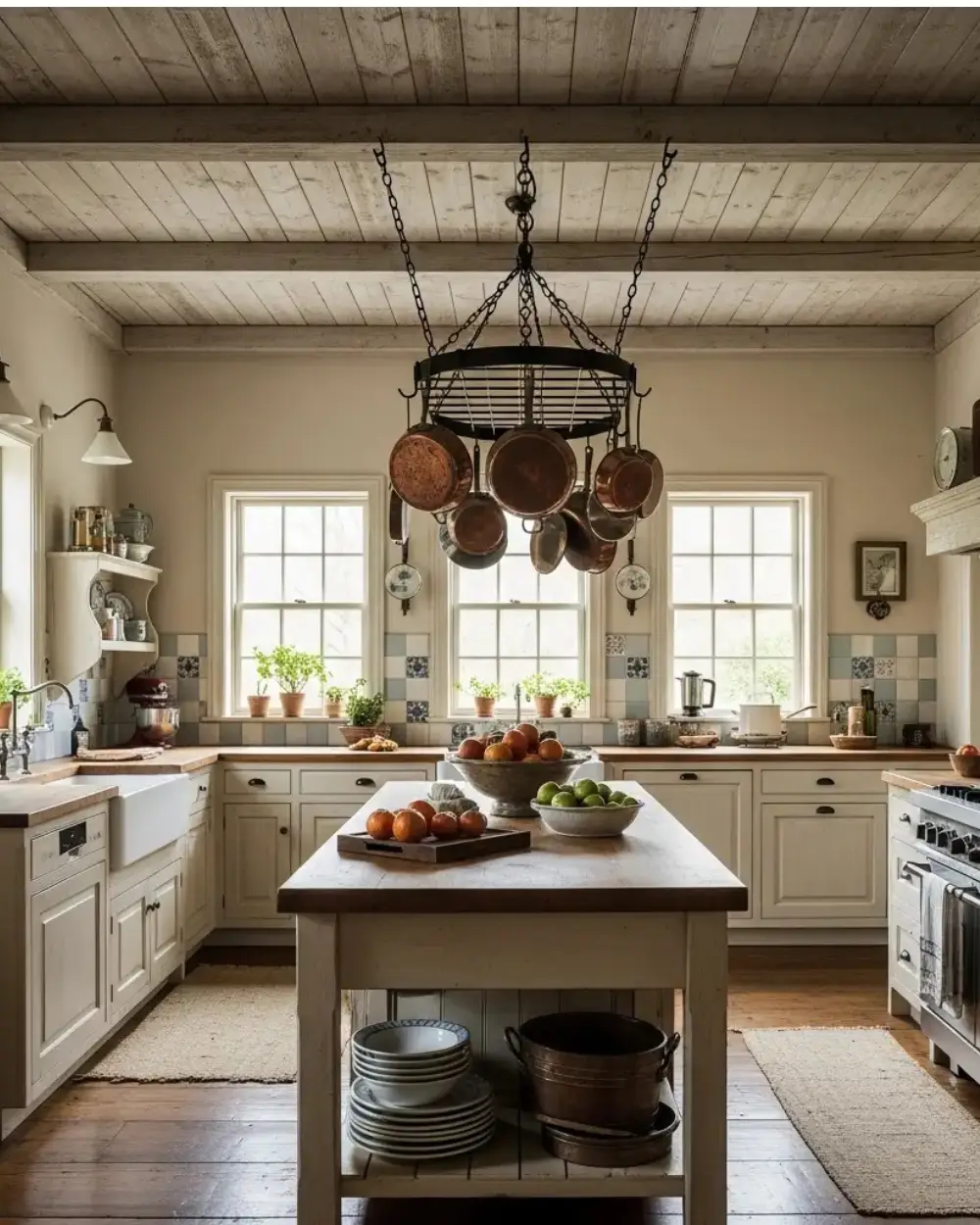

Rails and pot racks add both style and storage, making daily tools easy to grab. Great for compact kitchens, they also create a visual focal point above hobs or islands.
Tip: Stick to a limited colour palette for hanging items—think copper, black, or stainless steel—for a tidy, cohesive look.
Flooring and Ceiling Style Statements
22. Patterned Tile Flooring for Visual Punch
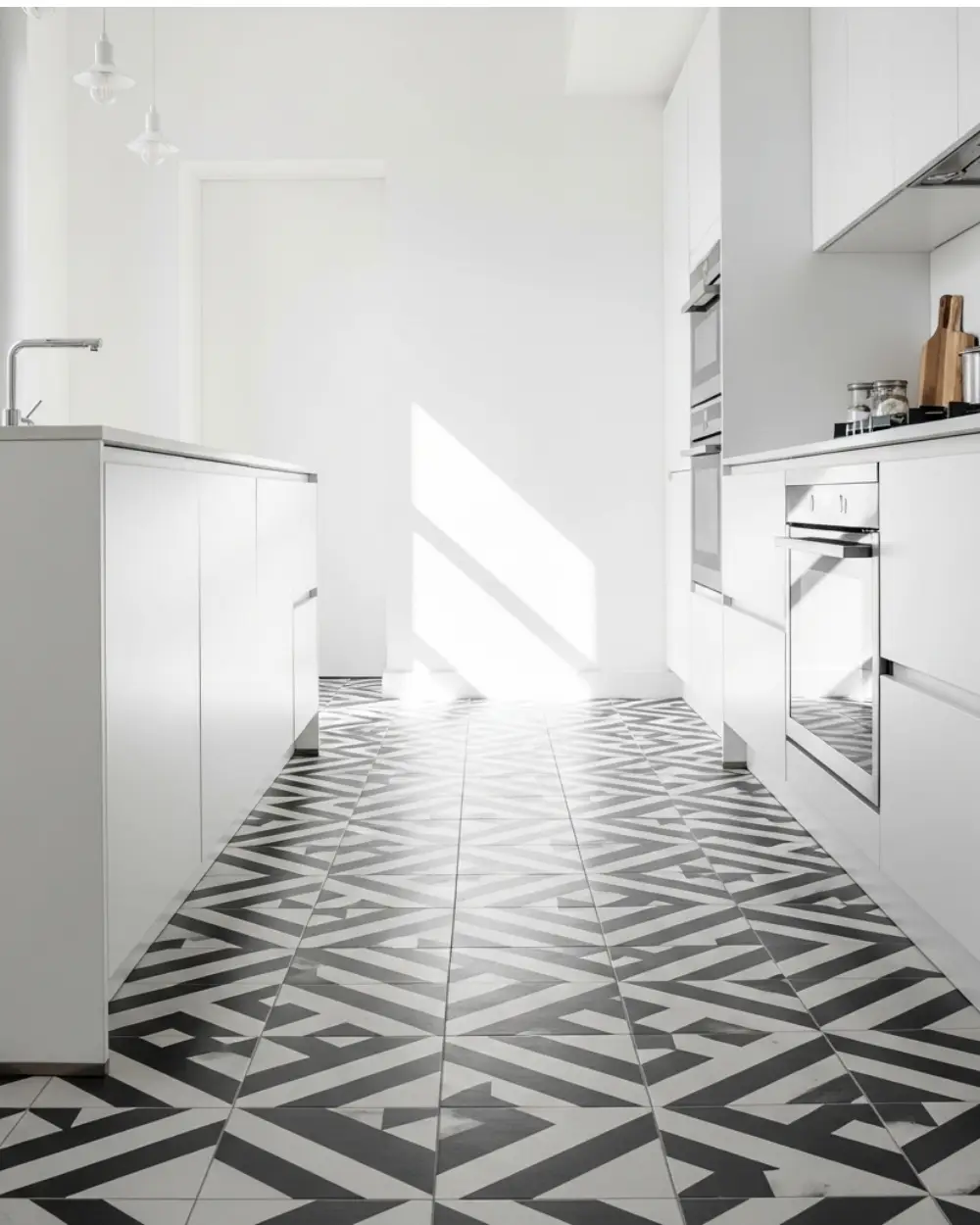
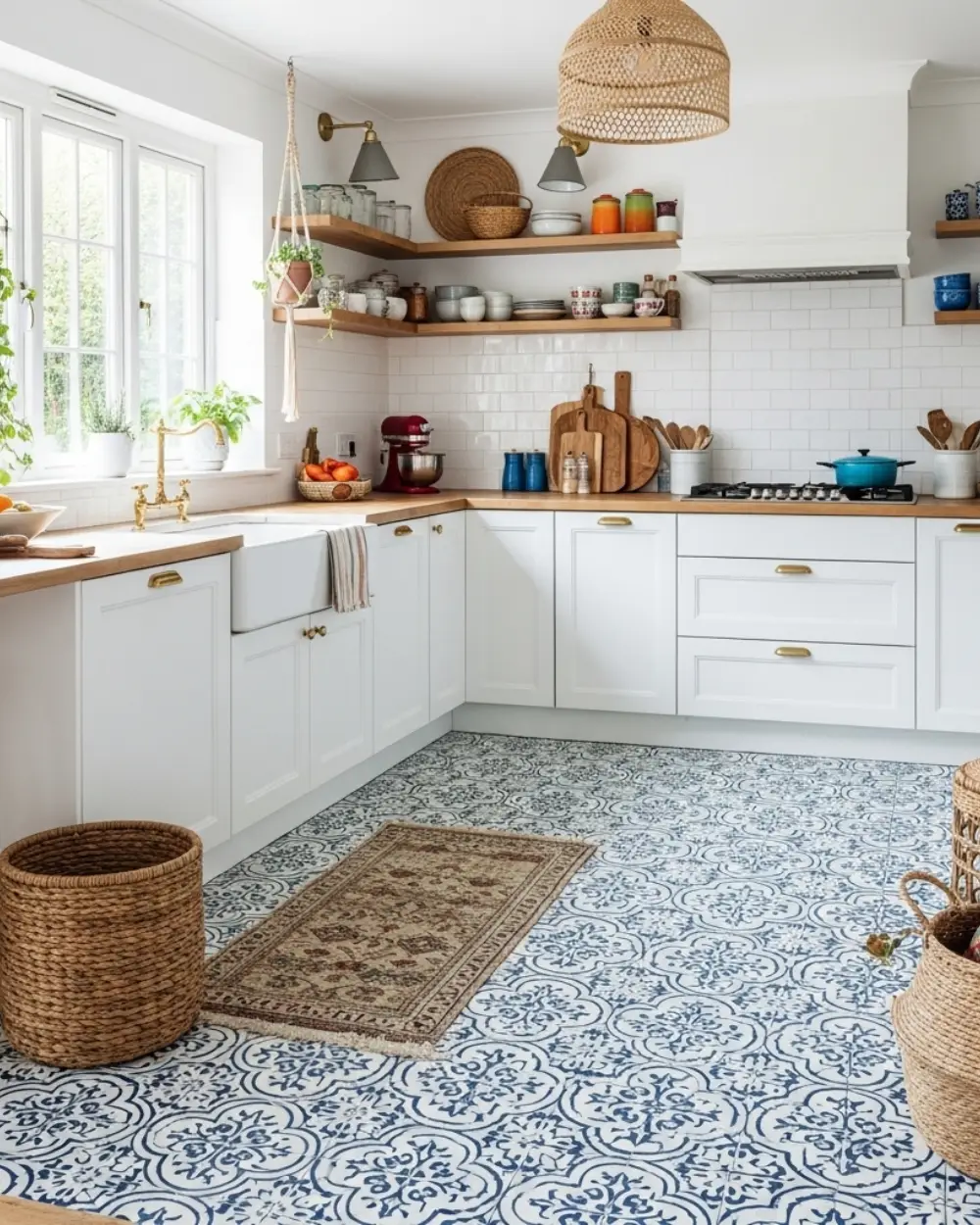
Patterned tile floors—geometric, encaustic, or retro styles—add serious character to an otherwise neutral kitchen. They’re durable, easy to clean, and make a strong first impression.
Tip: Let the floor lead the design. Keep walls and cabinets neutral, or pull one colour from the tile pattern for balance.
23. Exposed Beams or Statement Ceilings

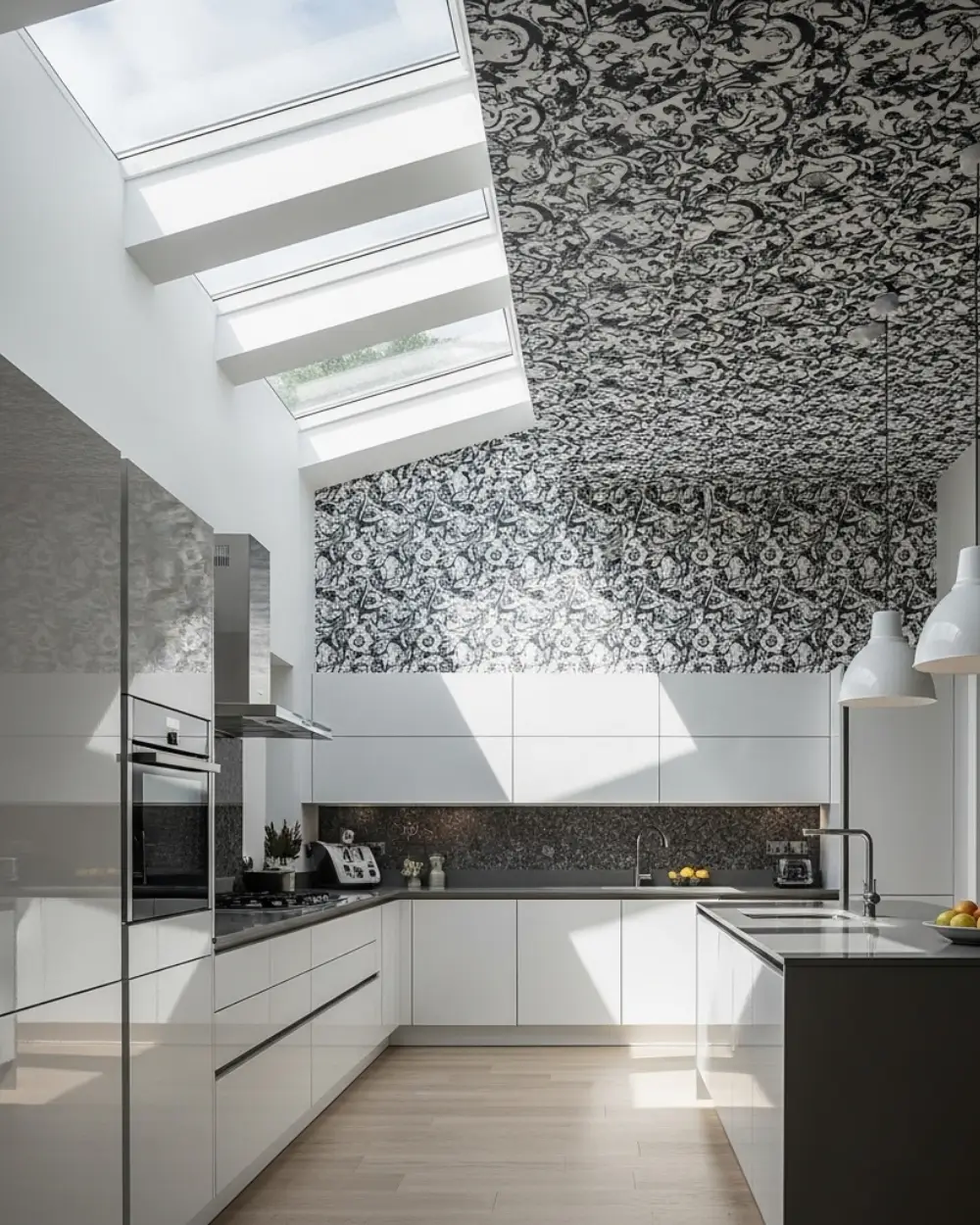
A statement ceiling or exposed timber beam draws the eye upward and makes a kitchen feel bigger. It works especially well in cottage-style or vaulted spaces.
Tip: Use beams as a base for pendant lighting or spotlights. For low ceilings, match beam colour to ceiling to reduce visual weight.
Frequently Asked Questions
How to design your kitchen?
Start with the work triangle: the distance between your sink, stove, and fridge should allow smooth movement. Then focus on storage—use deep drawers, pull-out shelves, and vertical space. Keep colors light in small kitchens and add lighting under cabinets. Last but not least: make it yours. A functional kitchen should also reflect your style and how you cook.
Are black kitchen sinks a bad idea?
Not at all—but they do come with pros and cons. Black sinks (usually granite composite or quartz) look sleek, hide stains, and add contrast to light countertops. However, they can show limescale and soap residue more easily than stainless steel. If you’ve got hard water, regular cleaning is key. They’re stylish—but they require a bit of upkeep.
Is vinyl wrapping a kitchen a good idea?
Yes—if you want a budget-friendly facelift without a full renovation. Vinyl wraps can transform cabinet doors and panels with a range of finishes (gloss, matte, woodgrain) at a fraction of the cost of replacements. Just make sure the surface is smooth and the wrap is professionally applied for best results. Great for renters or refreshes!
Are kitchen rugs a good idea?
Definitely—if you choose the right type. Kitchen rugs add warmth, style, and comfort underfoot, especially in front of the sink or stove. Go for low-pile, washable, non-slip rugs made from durable materials like polypropylene or cotton. Avoid thick, fluffy ones unless you like spaghetti sauce surprises.