
Happy clients 460+ - Projects 720+
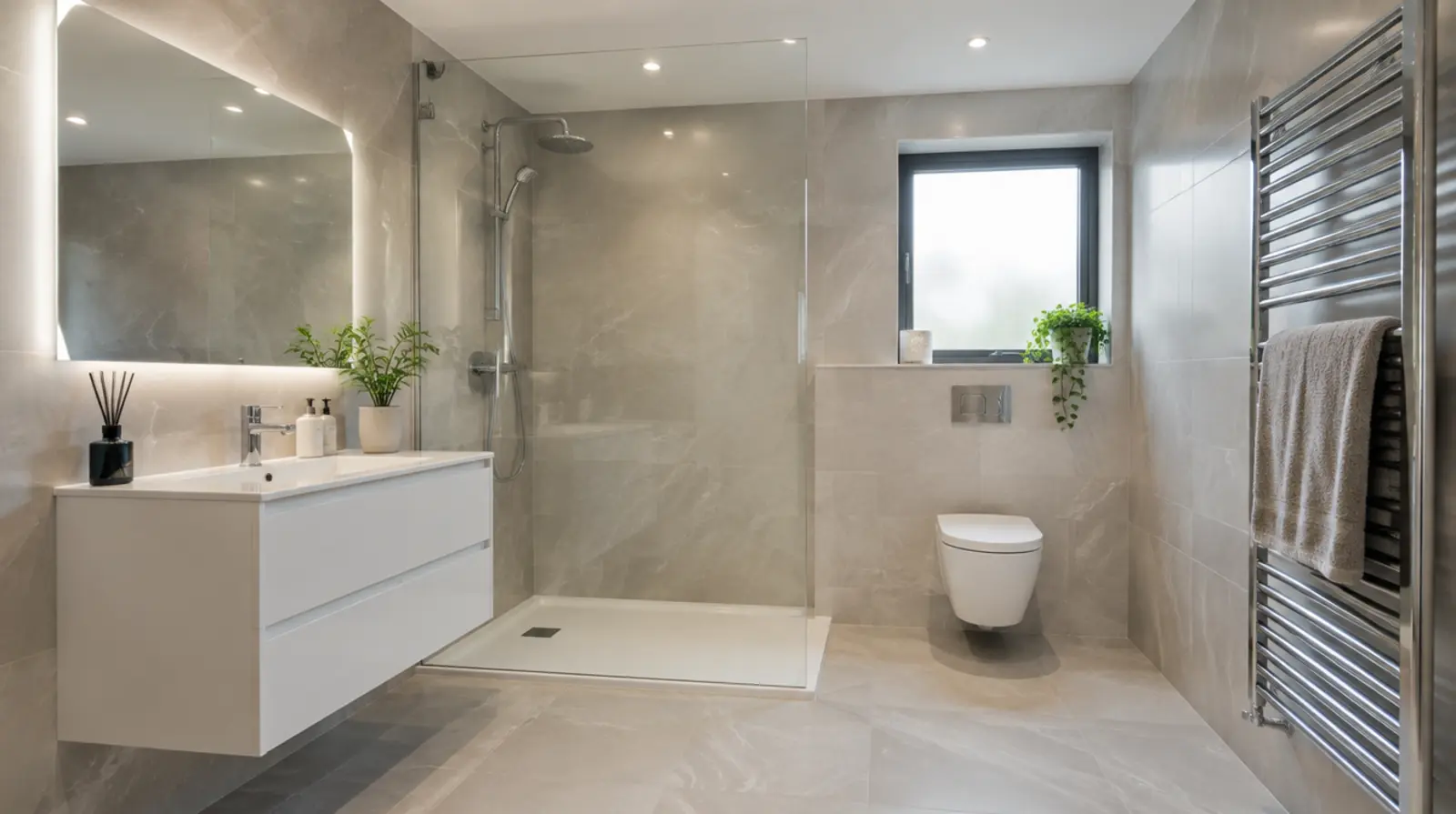
Bathroom Renovation Dublin
Full bathroom renovations, wet rooms and ensuites, waterproofed and tiled by one team.
- 1-year workmanship warranty
- Written quote, no hidden markups
- Free call-out in Dublin
Renovation Dublin is a Dublin renovation team that fully renovates bathrooms, from a straight swap of the suite to a new layout with a walk-in shower or wet room. We handle the plumbing, electrics, waterproofing, tiling and finishing together, so the job runs in one continuous sequence instead of waiting between separate tradespeople.
What it typically costs
| Job | Typical range | Note |
|---|---|---|
| Small refresh, same layout | about €5,300 | Typical 2026 Irish quote, excluding VAT |
| Mid-spec renovation, 3 to 5 square metres | about €10,200 | Typical 2026 Irish quote, excluding VAT |
| Per square metre, small 3 square metre bathroom | about €2,500 | Fixed costs weigh more in small rooms |
Market ranges from 2026 Irish bathroom quote data, excluding VAT. Our written quote is itemised for your bathroom and starting prices include VAT.
The numbers are compared in our guide to bathroom renovation cost in Ireland.
What is included
- Strip-out and disposal of the old suite and tiles
- Plumbing first and second fix
- Waterproofing and tanking of wet areas
- Electrical work by Safe Electric registered electricians
- Extractor fan and ventilation
- Wall and floor tiling
- Suite, shower, bath and vanity installation
- Painting, silicone sealing and handover
Waterproofing and tanking
Waterproofing is the part of a bathroom you never see and the part that fails most expensively. The shower area and any wet-room floor need a continuous waterproof membrane taken up the walls and sealed at the corners and the drain, before any tile goes on. Skipping or rushing it is the usual cause of leaks into the ceiling below.
Wet rooms and walk-in showers
A wet room needs the floor to fall to a drain, which means either lowering the floor or building it up with a former. In older houses with timber floors this can need joist work. A walk-in shower with a low tray is the cheaper alternative and suits most layouts.
Ensuites and small bathrooms
Fitting an ensuite into a bedroom needs a waste run, a ventilation route and usually a stud wall, and in a small space the details matter: a shower door that opens outwards, a wall-hung toilet to save depth, and recessed storage in the stud wall.
Ventilation and extraction
A bathroom needs a fan that actually extracts to the outside, ducted properly and sized for the room. Damp and mould in a renovated bathroom is almost always a ventilation problem rather than a tile problem.
Tiling and finishes
Large-format tiles mean fewer grout lines but need a flatter wall and more careful setting out. The finish list also includes the vanity, mirror, heated towel rail and lighting, which should be chosen before the second fix so the wall and electrical positions are right.
Common bathroom renovation mistakes
Poor waterproofing, too little ventilation, choosing a layout without checking where the soil pipe runs, and ordering the suite before the room is measured are the usual ones. A site check before the quote avoids all four.
Choosing a bathroom layout
The cheapest layouts keep the toilet, basin and bath or shower where the soil pipe and supplies already are. Moving a toilet more than a short distance needs a sloped waste run, which can mean lifting floorboards or boxing in pipework. Swapping a bath for a walk-in shower in the same space is one of the most common changes and gains room without moving pipes.
Showers, screens and trays
A walk-in shower with a low-profile tray or a level-access wet floor suits most homes. Glass thickness of 8 millimetres or more and a clean-to-wipe fixed panel avoid hinges that trap water. Check the water pressure and boiler type before choosing a shower, because some thermostatic and rainfall heads need a minimum flow to work properly.
Toilets, basins and vanity units
Wall-hung toilets with a concealed cistern save floor space and are easy to clean, but they need a strong frame or a stud wall built to carry the load. Wall-hung vanities make a small room feel larger. Choose taps and wastes that suit the basin, and confirm the cistern, flush plate and pan are all compatible before ordering.
Heating and towel rails
A heated towel rail dries towels and warms a small room. Electric rails are the easiest to add where the central heating is awkward to extend, while a rail connected to the heating system is cheaper to run. Underfloor heating in a bathroom is worth considering if the floor is being lifted anyway, since the tiles feel warm and the room stays drier.
Bathroom electrics and zones
Electrical work in a bathroom follows zone rules that decide which fittings can be used near the bath and shower. Lighting, extractor fans and shaver sockets all have to suit their zone and be on circuits protected by a residual current device. All electrical work is done by Safe Electric registered electricians, who certify it for the homeowner.
Accessibility and future-proofing
If a bathroom might be used by someone with limited mobility, a level-access shower, wider door, grab-rail fixing points and non-slip tiles are easy to include now and expensive to add later. Planning a bath-to-shower conversion with this in mind avoids a second renovation.
How the job runs
- 1
Free call-out
We measure the room, check the pipework and floor, and talk through the layout and shower type.
- 2
Written quote
An itemised quote before work starts, with the suite and tile allowances stated.
- 3
Strip and build
Strip-out, first fix, waterproofing, tiling and second fix in the right order.
- 4
Handover
We test every outlet, check the seals and hand over warranties.
Why Dublin homeowners use us
One team, every trade
Plumbing, electrics, plastering, tiling and joinery run in one planned sequence.
Written quote first
An itemised quote before work starts, with no hidden markups on materials.
Insured and warranted
Fully insured, a 1-year workmanship warranty, and Safe Electric registered electricians.
Regular site updates
You hear from us during the job, not only at the end.
10+ years renovating Dublin homes. 460+ happy clients. 720+ projects.
Frequently asked questions
How long does a bathroom renovation take?
A full bathroom renovation commonly takes one to two weeks on site, longer with a wet room, a new layout or structural floor work. Our timeline guide breaks it down by stage.
How much does a bathroom renovation cost in Dublin?
Typical 2026 Irish quotes run from about €5,300 for a small refresh to about €10,200 for a mid-spec 3 to 5 square metre bathroom, excluding VAT. Layout changes, wet rooms and premium tile move it up.
Do I need planning permission to renovate a bathroom?
Internal bathroom work normally does not need planning permission. Building Regulations still apply to the plumbing, ventilation and electrics.
Can I do the tiling myself to save money?
You can supply and fix tiles yourself, but the waterproofing underneath should be done as part of the main job so it can be warranted. Tell us at the call-out and we will quote it either way.
Is there a warranty?
Yes, a 1-year workmanship warranty, and fittings such as sanitaryware carry their manufacturers' warranties.
How much should I pay for a bathroom renovation?
Published 2026 Irish quote data puts a small same-layout refresh at about €5,300 and a mid-spec bathroom of 3 to 5 square metres at about €10,200, excluding VAT. Premium finishes, wet rooms and layout changes cost more.
What is the golden rule for bathroom layouts?
Keep the plumbing where it is. Moving the toilet soil pipe, shower waste and supplies is what adds cost and time, so a design that works with the existing runs is the cheapest to build.
Can you renovate a bathroom on a budget?
Yes. Keep the layout, choose a standard suite and tile, and tile only the wet areas. Skipping a full wall tile to the ceiling and keeping the existing window saves money without hurting the result.
Ready to talk through your renovation?
Free call-out anywhere in Dublin and north Wicklow.